
Robert F. Kennedy Bridge (Triborough Bridge)
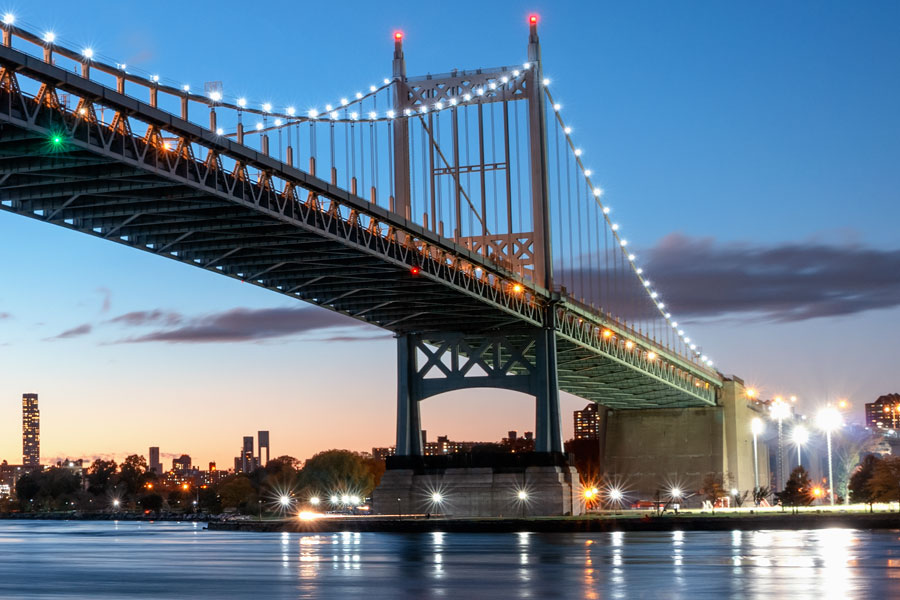
The Triborough Bridge, officially the Robert F. Kennedy Bridge since 2008, is one of New York City’s most important and most complex crossings. Rather than linking just two points, it is a multi-span bridge-and-roadway system connecting Manhattan, Queens, and the Bronx by way of Randall’s Island. Opened in 1936, it remains a critical part of the regional transportation network and a key route for drivers moving between New York City and Long Island.
History
- Planning & Construction: Conceived during the 1920s, the Triborough Bridge project was delayed by economic turmoil before major work accelerated in the 1930s under the leadership of Robert Moses, with substantial public-works support.
- Opening: The bridge complex opened on July 11, 1936, as one of the era’s most significant transportation projects.
- Renaming: In 2008, the Triborough was officially renamed the Robert F. Kennedy Bridge in honor of the late U.S. Senator, though many New Yorkers still refer to it simply as the Triborough.
Design & Features
- Bridge System: The crossing is a network of three main spans linked by ramps and approach roads centered on Randall’s Island:
- Traffic Role: The complex carries heavy daily traffic and serves as an important connector for travel between boroughs, regional expressways, and Long Island routes.
- Tolls: Tolls are collected electronically through E-ZPass or Tolls by Mail; cash toll collection is not available. Rates and vehicle classifications may change, so check current details before traveling.
- Shared-Use Access: Pedestrian and bicycle routes associated with the bridge complex and Randall’s Island are available, though access points, hours, and temporary closures can vary by project, season, or weather.
Importance for Long Island Travelers
The Triborough Bridge is especially important for drivers from Long Island heading to:
- The Bronx and New England – via connections to the Major Deegan Expressway (I-87), Bruckner Expressway (I-278), and regional routes leading toward I-95.
- Upper Manhattan – by way of Harlem River Drive, the FDR Drive area, and nearby uptown approaches.
- Randall’s Island – a major recreation and event destination with sports fields, waterfront paths, and venue access closely tied to the bridge complex.
Because of its strategic location, the bridge helps distribute traffic between boroughs and offers an important alternative to other East River and Harlem River crossings, including the Midtown Tunnel and Queensboro Bridge.
Nearby Landmarks
- Queens Side: Astoria Park, known for its waterfront views, running track, tennis courts, and large public pool complex.
- Manhattan Side: East Harlem, a culturally rich neighborhood with historic streets, local dining, and quick access to the Harlem River waterfront.
- Bronx Side: Port Morris and Mott Haven, gateway neighborhoods for reaching broader Bronx destinations and regional highways.
Travel Tips
- Expect congestion: Traffic can build quickly during rush hours, holiday travel periods, weekends, and major events on Randall’s Island.
- Use electronic toll planning: Make sure your E-ZPass account and plate information are current to avoid billing issues.
- Check ahead before walking or biking: Shared-use access, maintenance work, and weather-related restrictions can change. For current bridge and toll information, see MTA Bridges & Tunnels.
Q&A – Triborough Bridge
Q: Why is it called the Triborough Bridge?
A: Because the bridge complex links three boroughs – Queens, Manhattan, and the Bronx – through Randall’s Island.
Q: When was it renamed the Robert F. Kennedy Bridge?
A: In 2008, though many New Yorkers still refer to it as the Triborough.
Q: Does the bridge connect directly to Long Island highways?
A: Yes. On the Queens side, it connects with the Grand Central Parkway, which provides onward access to the Long Island Expressway and other major roads serving Long Island.
Q: Can pedestrians or bicycles cross the Triborough Bridge?
A: Access is available through shared-use routes tied to the bridge complex and Randall’s Island, but exact entry points, hours, and temporary closures may change, so it is smart to check current guidance before your trip.
Robert F. Kennedy Bridge (Triborough Bridge)
Area Snapshot
| Feature | Details |
|---|---|
| Opened | 1936 |
| Bridge Type | Suspension, vertical-lift, and truss bridge complex |
| Main Spans | Queens, Harlem River, and Bronx Kills |
| Traffic | Multiple lanes and connecting ramps; configuration varies across the complex |
| Operator | MTA Bridges & Tunnels |
| Primary Connection | Queens ↔ Randall’s Island ↔ Manhattan and the Bronx |
The Triborough Bridge stands as one of New York City’s most ambitious engineering projects and remains a cornerstone of the metropolitan transportation network. By linking three boroughs and providing key connections for Long Island travelers, it continues to serve commuters, commercial traffic, and visitors every day. Its scale, historic significance, and strategic location make it both a practical crossing and an enduring symbol of New York infrastructure.
Are you ready for fall on Long Island? Check out these local seasonal guides:
🍎 Apple Picking | 🍂 Fall Festivals & Farm Activities | 👻 Haunted Houses | 🎃 Pumpkin Picking