
Civil War & 20th Century Military and Aviation History
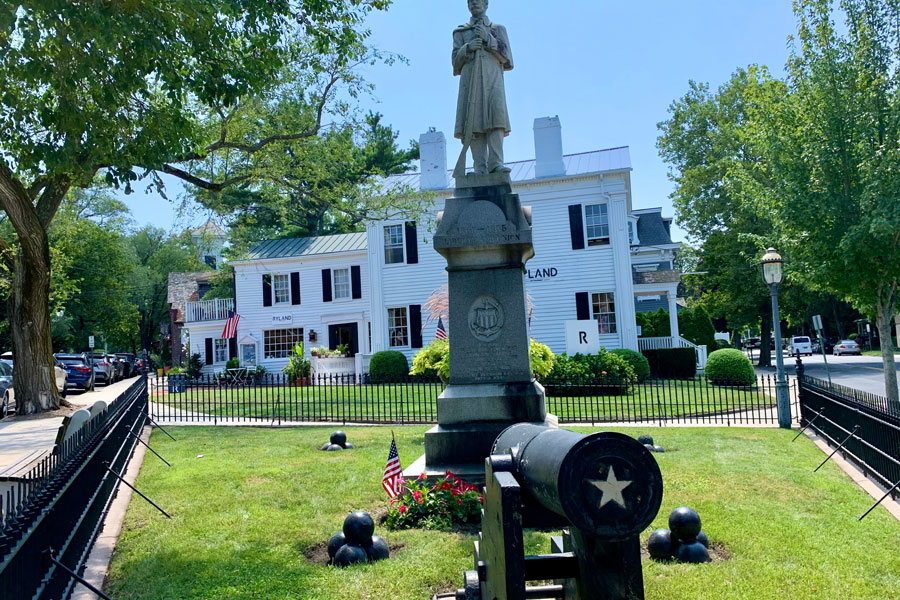
From local Union enlistments in the 1860s to wartime training camps, breakthrough aviation, and aerospace engineering in the 20th century, Long Island played an important role in American military and technology history. This era left behind memorials, former military grounds, aviation landmarks, and museum collections that still help tell the story today.
Long Island in the Civil War
Although no major Civil War battles were fought on Long Island, the region contributed meaningfully to the Union war effort between 1861 and 1865. For visitors today, this history is usually encountered through monuments, cemeteries, village greens, and local historical collections rather than battlefield-style sites.
- Volunteers: Men from Suffolk County and from communities in what is now Nassau County – then still part of Queens County – enlisted in New York regiments and served in infantry, cavalry, artillery, and naval units.
- Harbor and Supply Connections: Long Island’s harbors, farms, and maritime trades supported regional shipping, provisioning, and wartime commerce tied to the greater New York Harbor area.
- Legacy: Monuments and memorials in towns such as Greenport, Huntington, and Sag Harbor continue to honor Long Islanders who served in the conflict.
Camp Upton – Yaphank’s Military Legacy
- History: Established in 1917 near Yaphank in Suffolk County, Camp Upton was created as a major U.S. Army cantonment during World War I. Large numbers of soldiers trained, processed, and mobilized there before deployment overseas.
- World War II Role: The camp was reactivated during World War II and again served important induction, reception, and related military functions.
- Cultural Note: Irving Berlin’s famous Yip Yip Yaphank revue grew out of his military service at Camp Upton and became one of the best-known entertainment stories associated with the base.
- Today: Much of the former Camp Upton site later became part of Brookhaven National Laboratory, a nationally known scientific research center. Access to laboratory grounds, tours, and public programs may be limited or scheduled, so check ahead before visiting.
Aviation and Aerospace History on Long Island
Charles Lindbergh and Roosevelt Field
- Location: Roosevelt Field was located on the Hempstead Plains in the Garden City area.
- Event: On May 20, 1927, Charles Lindbergh took off in the Spirit of St. Louis on the first solo nonstop transatlantic flight, landing near Paris about 33 hours later.
- Significance: The flight became one of the defining moments in aviation history and cemented Long Island’s place in the story of early flight.
- Today: The original airfield has long since been redeveloped, but nearby historic markers, museum exhibits, and aviation interpretation help preserve the area’s legacy. Hours, exhibits, and public programming vary by season and operator.
Grumman & Aerospace Development
- Origins: Grumman Aircraft Engineering Corporation was founded in 1929 in Baldwin, with major Long Island manufacturing and engineering operations later centered in Bethpage.
- World War II Contributions: Grumman produced military aircraft including the F4F Wildcat and F6F Hellcat, both important to U.S. naval aviation in the Pacific Theater.
- Space Program: In the 1960s, Grumman engineers built the Lunar Module used in NASA’s Apollo missions, including Apollo 11.
- Legacy: Grumman later became part of Northrop Grumman, and its Long Island footprint remains central to the region’s aerospace identity through museum collections, memorials, former plant communities, and preserved artifacts.
Legacy of the Era
From Civil War service and harbor support to military mobilization, aviation breakthroughs, and the space program, Long Island’s history in this era reflects both community sacrifice and technological ambition. Many of the original sites have changed over time, but their stories remain visible in village memorials, museums, research institutions, and historic landscapes across the island.
Quick Snapshot
| Landmark/Event | Significance |
|---|---|
| Civil War Volunteers | Men from Suffolk County and from communities now in Nassau County fought for the Union |
| Camp Upton (Yaphank) | World War I cantonment; reactivated in World War II; site later became part of Brookhaven National Laboratory |
| Roosevelt Field (1927) | Launch site of Charles Lindbergh’s historic transatlantic flight |
| Grumman Aircraft | Built major wartime aircraft and later the Apollo Lunar Module |
From the sacrifices of Long Islanders during the Civil War to the technological achievements of aviation and space exploration, this period shows how deeply the island is woven into national history. If you plan to explore related memorials, museums, former airfield sites, or the Camp Upton/Brookhaven area, check ahead for current access, exhibits, guided tours, and seasonal hours.
Are you ready for fall on Long Island? Check out these local seasonal guides:
🍎 Apple Picking | 🍂 Fall Festivals & Farm Activities | 👻 Haunted Houses | 🎃 Pumpkin Picking