
The Montauk Monster: Mystery, Theories, and a Long Island Legend
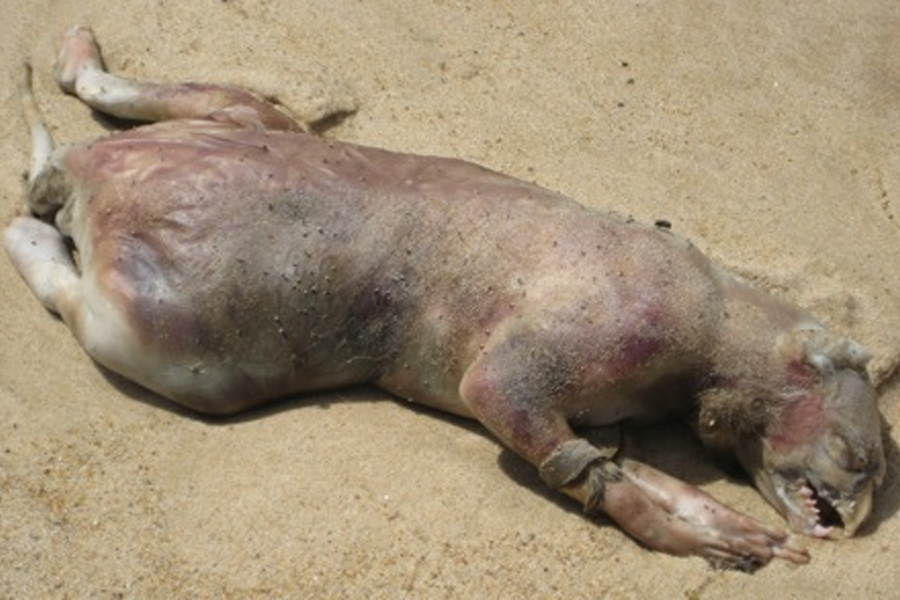
In July 2008, beachgoers in Montauk, New York, reported a strange animal carcass washed up along the shoreline, widely described as being found near Ditch Plains Beach. Bloated, mostly hairless, and difficult to recognize at a glance, the body quickly became the subject of intense internet speculation. A small number of photographs circulated online, with one especially memorable image turning the so-called Montauk Monster into a viral mystery. Years later, it remains one of Long Island’s best-known modern legends.
The Discovery
The story took off because the carcass looked unfamiliar and no widely accepted public identification emerged at the time. The animal’s bare skin, exposed teeth, and oddly shaped snout made it appear almost unnatural in photographs. Montauk was already a place associated with rumor, surf-town mythology, and the broader fascination surrounding nearby Plum Island, so the image spread quickly through blogs, tabloids, and national media.
Why Did It Look So Strange?
The animal’s disturbing appearance was likely the result of ordinary decomposition rather than anything supernatural. Time in salt water can loosen fur, bloat the body, and strip away soft tissue around the nose and mouth. That process can make a familiar mammal look shockingly unfamiliar. In the Montauk photos, missing fur, tightened skin, and exposed bone created the illusion of a beak-like face and exaggerated features.
Without scale, context, or a preserved specimen to examine, the photos invited guesswork. What looked bizarre to casual viewers could still fit a known animal once decomposition was taken into account.
Leading Theories
Over the years, several explanations have been offered. Some are grounded in anatomy, while others belong more to folklore and conspiracy culture.
- Raccoon (most widely accepted explanation) – Wildlife specialists and many independent observers have pointed to the teeth, skull shape, and five-digit paws as the strongest clues. Decomposition would explain the missing fur and distorted snout.
- Dog – Sometimes suggested because of the body size, but the paw structure and dentition do not line up as well as they do with a raccoon.
- Pig or sheep – Early guesses focused on the torso and overall shape, but the teeth and limbs make these ideas much less convincing.
- Large rodent or capybara – Internet speculation went in this direction too, though the teeth are not rodent-like, and capybaras are not native wildlife on Long Island.
- Turtle without a shell – A memorable online theory, but not a realistic one. A turtle’s shell is part of its skeleton and cannot simply fall off.
- Experiment, hoax, or unknown creature – These ideas keep the legend alive, especially in connection with Plum Island, but no credible evidence has surfaced to support them.
Why the Raccoon Theory Fits Best
The raccoon explanation remains the most persuasive because it matches the basic anatomy seen in the photographs. The paws appear to show five clawed digits, the teeth fit a small omnivorous mammal, and the body proportions are in the right range for an adult raccoon. When people compare the image to a raccoon skull and skeleton, the alignment is far more convincing than the more exotic alternatives.
What turned a probable raccoon into a “monster” was the condition of the remains. Missing fur, swelling, and tissue loss around the nose can radically alter an animal’s face. In other words, the mystery was likely created by the ocean as much as by the animal itself.
The Plum Island Connection
Plum Island lies off Long Island’s North Fork near Orient Point and, for decades, was home to the federal Plum Island Animal Disease Center. Because the island was restricted and not open for casual visitation, it became an easy target for rumor and speculation.
That reputation helped turn the Montauk Monster from a strange beach find into a conspiracy story. The idea that the carcass came from a lab experiment spread quickly online, but no credible evidence has ever connected the animal to Plum Island. The link is cultural and geographic, not scientific.
Was It Ever Officially Identified?
No widely cited public lab report, preserved specimen, or formal government identification ever settled the question conclusively. That gap is a major reason the story still circulates. If the remains were discarded, removed, or otherwise lost before a proper examination, the opportunity for definitive testing would have disappeared almost immediately.
Even so, the lack of an official document does not necessarily mean the animal was unknown. In practical terms, many experts and observers considered the raccoon explanation sufficient, even if the public never got a neat final report.
What Happened to the Carcass?
That remains one of the most frustrating parts of the story. Accounts differ, and no clear chain of custody was ever made public. Some versions say the body was removed and discarded like other dead wildlife found on the beach. Others claim it may have been taken away by curious individuals before anything official happened. Either way, the disappearance of the carcass helped transform a likely wildlife misidentification into enduring folklore.
Were There Other “Montauk Monsters”?
The 2008 Montauk carcass was not the only odd beach find to generate headlines. In 2009, another strange-looking body was reported in Southold on Long Island’s North Fork, and similar discoveries have periodically sparked attention elsewhere along the Northeast coast. In many cases, the explanation is the same: a familiar animal made unrecognizable by water exposure, bloating, scavenging, and time.
Legacy and Pop Culture
The Montauk Monster quickly entered the same strange corner of local lore that includes the Amityville Horror, the Montauk Project, and other Long Island mysteries. Whether people see it as a decomposed raccoon, an unsolved oddity, or a symbol of internet-era mythmaking, the story has outlasted the original event by a wide margin.
Seeing the Setting Today
If this legend sends you exploring, remember that Ditch Plains is a real beach in Montauk, known for surfing, ocean views, and dramatic shoreline scenery. Beach access, parking rules, surf regulations, and seasonal services may vary, so it is smart to check current local guidance before visiting. Plum Island, despite its role in the story, is not a casual tourist stop.
If you come across stranded wildlife or animal remains on the shore, do not handle them. Give the area space and report the situation to local authorities, park staff, or appropriate wildlife responders, especially if the animal appears to be a seal, sea turtle, or other marine species. The real-life setting behind the Montauk Monster is still one of Long Island’s most memorable coastal landscapes, even without the mystery.
Key Facts & Details
| Name | Montauk Monster |
| First Reported | July 2008 |
| Location | Montauk, New York |
| Reported Discovery Area | Near Ditch Plains Beach |
| What Was Found | A badly decomposed, mostly hairless animal carcass |
| Most Widely Accepted Explanation | Decomposed raccoon |
| Official Identification | No widely cited public laboratory identification was released |
| Connection to Plum Island | Popular conspiracy theory; no credible evidence has established a connection |
| Current Status | Unconfirmed formally, but generally regarded as a decomposed known animal rather than an unknown species |
More than 18 years after it washed ashore, the Montauk Monster remains one of Long Island’s most recognizable modern mysteries. The evidence strongly favors an ordinary animal transformed by decomposition, but the missing carcass, unusual photographs, and proximity to places already surrounded by local legend gave the story a life of its own. What began as a strange discovery on a Montauk beach has become a lasting piece of Long Island folklore, remembered as much for the mystery it created as for whatever the creature actually was.
Are you ready for fall on Long Island? Check out these local seasonal guides:
🍎 Apple Picking | 🍂 Fall Festivals & Farm Activities | 👻 Haunted Houses | 🎃 Pumpkin Picking