
Governors Island
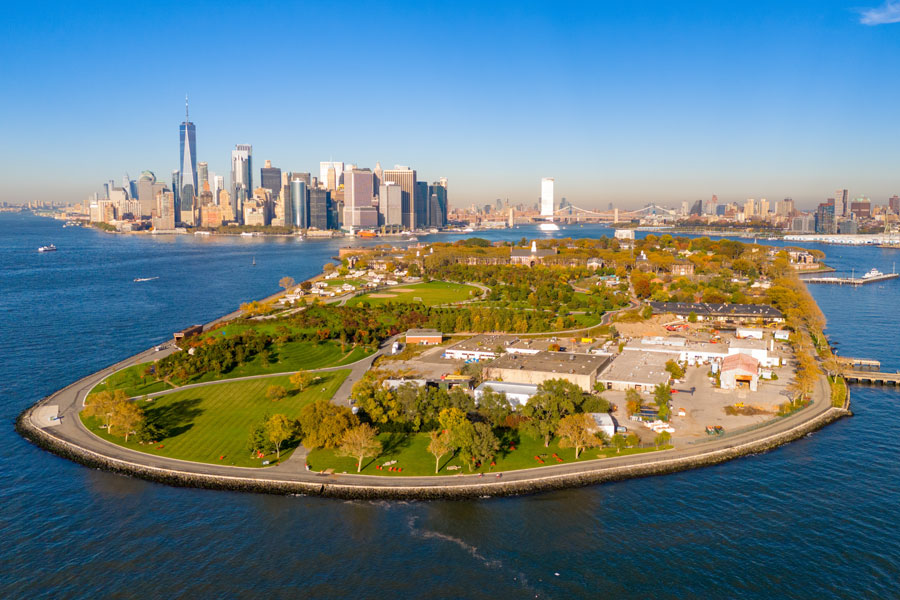
Governors Island, a 172-acre island in New York Harbor just south of Manhattan and west of Brooklyn, is a distinctive urban getaway that blends parkland, public art, historic architecture, and sweeping waterfront views. Long shaped by military use, the island is now a largely car-free public space where visitors come to walk, bike, relax, and experience one of the harbor’s most memorable settings.
Location & Access
Governors Island sits roughly 800 yards off the southern tip of Manhattan, across the water from Brooklyn and the Buttermilk Channel. Public access is primarily by ferry from the Battery Maritime Building in Lower Manhattan, with seasonal or limited service from Brooklyn waterfront piers at certain times of year. There is no bridge or subway station on the island, so visitors should plan around ferry schedules. Once on the island, getting around is mostly by foot or bicycle.
Historical Overview
- Indigenous and Colonial Era: Before European colonization, the island was used by the Lenape and is widely associated with the name Paggank, often translated as “Nut Island.” Dutch colonial authorities took control of the island in the 17th century.
- Military Significance: After the American Revolution, the island became part of the U.S. defensive system for New York Harbor. Major fortifications followed, including Fort Jay and Castle Williams. From 1794 to 1966, the U.S. Army maintained an important post here; from 1966 to 1996, the U.S. Coast Guard used the island as a major command center.
- Transition to Public Space: In 2001, the federal government created Governors Island National Monument to protect Fort Jay and Castle Williams. In the early 2000s, most of the rest of the island was transferred for civic reuse and park development. Seasonal public access began in 2005, and year-round public access was later expanded in 2021.
What to See & Do
Governors Island offers a compelling mix of history, landscapes, recreation, and culture:
- Fort Jay & Castle Williams – These landmark fortifications are the island’s signature historic sites. Access, tours, and open hours can vary by season, so it is smart to check ahead if these are a priority.
- The Hills – This elevated landscape includes Outlook Hill, Slide Hill, Discovery Hill, and Grassy Hill, with broad views of Manhattan, Brooklyn, New York Harbor, and the Statue of Liberty.
- Hammock Grove & Picnic Areas – Shaded lawns, hammocks, and waterfront seating make the island a popular place to unwind. Bringing a picnic is common, and food options are often available on-site.
- Nolan Park & Colonels Row – These historic districts feature former officers’ homes and event spaces, and they often serve as settings for exhibitions, seasonal programming, and community events.
- Bike & Walk Routes – The island’s relatively flat roads and waterfront paths are ideal for strolling and cycling. Bike rentals are typically available near the ferry landing during the main visitor season.
- Events & Public Art – Governors Island regularly hosts art installations, performances, festivals, family activities, wellness programs, and other seasonal events.
- Food, Drinks & Harbor Views – Cafes, seasonal vendors, and pop-up offerings help round out the visit, while the waterfront promenades provide some of the island’s best skyline and harbor outlooks.
Visitor Information
- Operating Hours: Governors Island is generally open year-round, but hours vary by season, day of week, and special-event schedule. Evening access may be available for some programs; check ahead before visiting.
- Ferries: The primary public ferry departs from the Battery Maritime Building in Lower Manhattan. Brooklyn service may operate seasonally or on a more limited basis. Departure points, fares, and frequency can change, especially outside peak months.
- Admission: There is typically no general admission fee to enter the island itself, but ferry tickets are usually required unless a promotional free window or discount applies. Some events, tours, and special experiences may have separate charges.
- Getting Around: Most public areas are car-free. Walking and biking are the easiest ways to explore, and bringing your own bicycle is often allowed, subject to current ferry and island policies.
- Accessibility: Much of the island’s public landscape includes paved routes, accessible ferry boarding options, and accessible restrooms, though some historic structures and older areas may have limitations.
- Official Resources: For current schedules, tickets, events, and visitor policies, see the official Governors Island website. For monument information and fort-related details, see the National Park Service page for Governors Island National Monument.
Governors Island
Key Facts & Details
| Detail | Information |
|---|---|
| Area | 172 acres (approximately 0.27 square miles) |
| Location | Upper New York Bay, off Lower Manhattan and near the Brooklyn waterfront |
| Historic Uses | Lenape use, Dutch colonial control, U.S. Army post, U.S. Coast Guard installation |
| Major Fortifications | Fort Jay and Castle Williams |
| Public Access | Seasonal public access began in 2005; year-round public access expanded in 2021 |
| Main Managing Entities | The Trust for Governors Island and the National Park Service (for Governors Island National Monument) |
| Popular Activities | Picnicking, biking, walking, skyline viewing, cultural events, and historic sightseeing |
Governors Island reflects several layers of New York history, from Indigenous use and colonial control to military defense, Coast Guard operations, and its present role as a public park and cultural destination. Today, it offers a rare combination of open green space, landmark architecture, harbor scenery, and easy access from Manhattan and Brooklyn. Whether you visit for the forts, the skyline views, a bike ride, or a day outdoors, it remains one of the region’s most distinctive waterfront escapes.
Are you ready for fall on Long Island? Check out these local seasonal guides:
🍎 Apple Picking | 🍂 Fall Festivals & Farm Activities | 👻 Haunted Houses | 🎃 Pumpkin Picking