
Throgs Neck Bridge
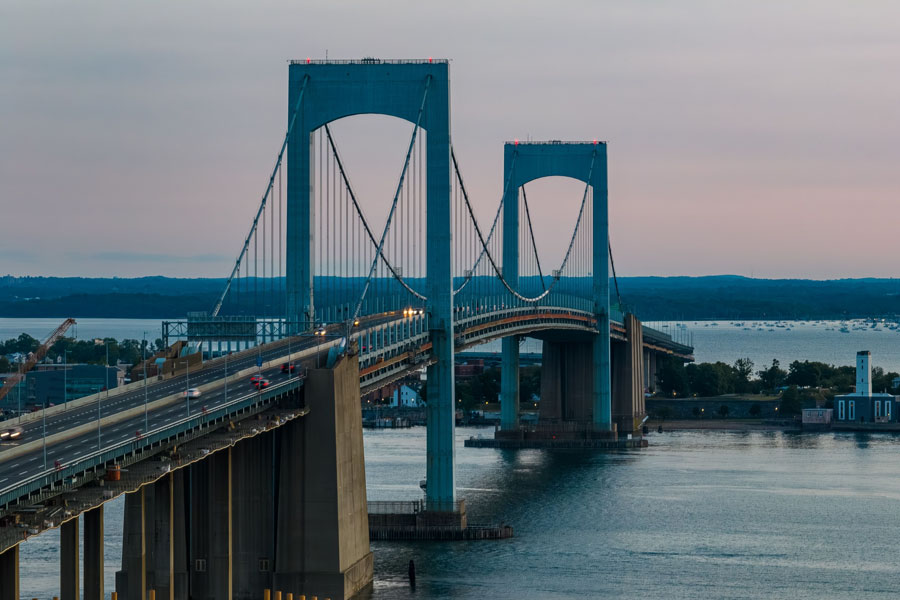
The Throgs Neck Bridge is one of the easternmost major vehicle crossings between Queens and the Bronx, serving as a key route for travelers heading between Long Island, New York City, Westchester, and the Northeast. Opened in 1961, this suspension bridge carries Interstate 295 between Bayside in Queens and the Throggs Neck section of the Bronx, near the point where the East River opens toward the Long Island Sound. Operated by MTA Bridges and Tunnels, it remains an important route for commuters, commercial traffic, and longer regional road trips.
History
- Planning & Construction: The bridge was developed to help relieve congestion on the nearby Bronx–Whitestone Bridge. Work took place in the late 1950s, and the crossing opened in the early 1960s.
- Opening: Dedicated on January 11, 1961, the bridge takes its name from the Throggs Neck peninsula in the Bronx. The bridge’s official name has long used the spelling “Throgs,” while the neighborhood is commonly spelled “Throggs Neck.”
- Modern Use: The crossing continues to handle heavy daily traffic. Travel times can vary widely during rush hours, summer weekends, and holiday travel periods.
Design & Features
- Bridge Type: Suspension bridge with a main span of 1,800 feet.
- Suspended Length: About 2,910 feet for the main suspended structure, with longer approach roadways on either side.
- Roadway: Six traffic lanes, generally three in each direction.
- Pedestrian Access: The bridge is for motor vehicles only and does not provide pedestrian or bicycle access.
- Tolling: Cashless, with tolls collected via E-ZPass or Tolls by Mail. Rates, discounts, and policies may change over time.
- Role in the Network: The bridge forms part of Interstate 295, making it a major connector between eastern Queens, the Bronx, and interstate routes beyond New York City.
Importance for Long Island Travelers
For many travelers leaving Long Island, the Throgs Neck Bridge is a practical route toward the mainland and points north. By connecting Queens to the Bronx via I-295, it provides:
- Access to I-95 and the New England corridor – useful for trips toward Connecticut, Rhode Island, Massachusetts, and beyond.
- Connections to major Bronx expressways – including links toward the Cross Bronx Expressway, Bruckner Expressway, and other regional routes.
- An alternative to the Bronx–Whitestone Bridge – route choice often depends on destination, current traffic, and roadway conditions.
For many Long Islanders, the Throgs Neck is a familiar route for trips to Westchester, upstate New York, and New England. Traffic can build quickly around commuter peaks, summer weekends, and holiday getaways, so checking live bridge and highway conditions before departure is a smart step.
Nearby Landmarks
- Queens Side: Bayside, Little Neck Bay, and Fort Totten Park, a historic former military site that now serves as a public waterfront park and recreation area.
- Bronx Side: The Throggs Neck neighborhood and nearby Ferry Point Park, known for broad views of both the Throgs Neck Bridge and the Bronx–Whitestone Bridge.
There is no place to stop on the bridge itself for sightseeing, so nearby parks and waterfront areas are the best options for views and photos. Conditions, access points, and park hours can vary by season, so check ahead before visiting.
Throgs Neck Bridge
Area Snapshot
| Feature | Details |
|---|---|
| Opened | 1961 |
| Bridge Type | Suspension |
| Main Span | 1,800 feet |
| Suspended Length | About 2,910 feet |
| Lanes | 6 |
| Toll Collection | Cashless (E-ZPass and Tolls by Mail) |
| Operator | MTA Bridges & Tunnels |
| Primary Connection | Bayside, Queens (I-295) ↔ Throggs Neck, Bronx (I-295 with access to I-95 and other major expressways) |
For more than six decades, the Throgs Neck Bridge has served as an essential transportation link between Long Island and the rest of the Northeast. Its strategic location near the western approach to the Long Island Sound helps make it a frequent choice for commuters, freight traffic, and longer regional trips. Because tolling, traffic patterns, roadway work, and travel conditions can change, it is always smart to check current conditions before heading out.
Are you ready for fall on Long Island? Check out these local seasonal guides:
🍎 Apple Picking | 🍂 Fall Festivals & Farm Activities | 👻 Haunted Houses | 🎃 Pumpkin Picking