
Queensboro Bridge (Ed Koch Queensboro Bridge / 59th Street Bridge)
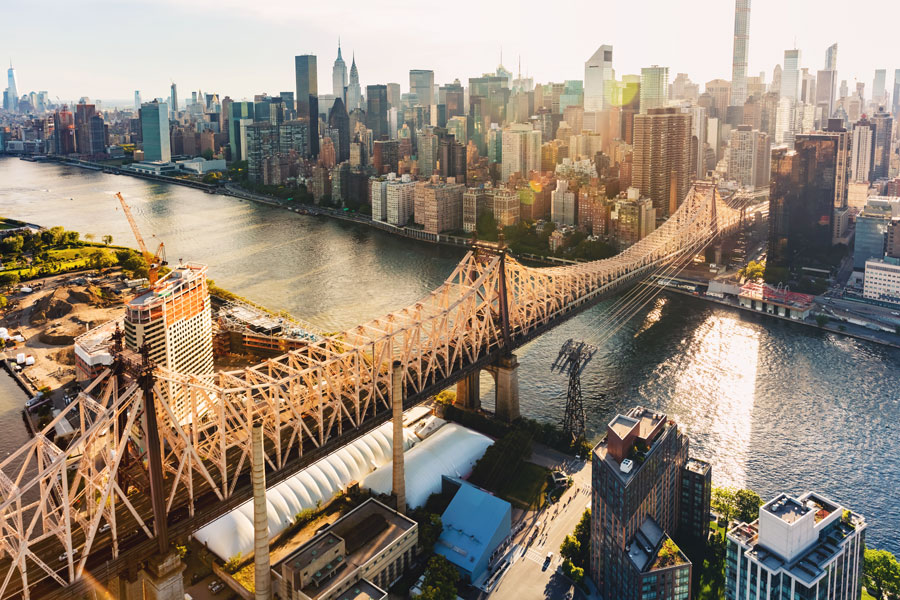
The Queensboro Bridge, officially the Ed Koch Queensboro Bridge and widely known as the 59th Street Bridge, is one of New York City’s most recognizable East River crossings. It links the East 59th Street and 60th Street area of Manhattan with Long Island City and Queens Plaza in Queens, passing over Roosevelt Island along the way. For Long Island-bound travelers leaving Manhattan, it remains one of the most practical toll-free approaches into Queens and the road network leading east toward Nassau and Suffolk Counties.
History of the Queensboro Bridge
- Opened: 1909
- Type: Double-deck cantilever bridge with suspended spans
- Design: Closely associated with engineer Gustav Lindenthal and architect Henry Hornbostel during the bridge’s long planning and development period
- Length: Approximately 7,449 feet
- Significance: Celebrated as a major engineering achievement when it opened, the bridge remains an essential part of New York City’s transportation system.
- Cultural Note: Famously referenced in Simon & Garfunkel’s “The 59th Street Bridge Song (Feelin’ Groovy)”.
Travel Connections
After crossing into Queens, travelers can connect to several major routes that continue across Long Island or lead to nearby destinations:
- Long Island Expressway (I-495): A primary east-west route across western and central Long Island, continuing toward Riverhead.
- Grand Central Parkway: Useful for connections toward LaGuardia Airport, the Northern State Parkway, and other eastbound routes.
- Queens Boulevard: A major thoroughfare through Queens with links to local neighborhoods and larger roadways.
- Manhattan-side connections: Approaches near the bridge feed into crosstown streets and the FDR Drive area, though turn patterns and access details can vary.
Driving the Bridge
- Tolls: The Queensboro Bridge is toll-free.
- Traffic: Congestion is common on both approaches, especially during weekday rush periods, holidays, and major events.
- Roadways: The bridge uses upper and lower vehicle levels; lane patterns, restrictions, and maintenance impacts may change.
- Commercial Use: Trucks and other larger vehicles may use the bridge subject to posted city regulations, size limits, and clearance rules.
Pedestrian and Bicycle Access
Pedestrian and bicycle access is available via the bridge’s shared-use path, which offers sweeping views of Manhattan, Roosevelt Island, Long Island City, and the East River. Access points, traffic patterns on the path, and temporary closures can change, so it is smart to check ahead before planning a walk or ride across.
Queensboro Bridge
Visitor Snapshot
| Feature | Details |
|---|---|
| Opened | 1909 |
| Official Name | Ed Koch Queensboro Bridge |
| Also Known As | 59th Street Bridge |
| Bridge Type | Double-deck cantilever bridge |
| Length | Approximately 7,449 feet |
| Toll | None |
| Connects | Manhattan (East 59th/60th Street area) with Long Island City and Queens Plaza in Queens |
| Road Connections | Links toward I-495, Grand Central Parkway, Queens Boulevard, and other western Queens routes |
| Pedestrian/Bike Access | Available via a shared-use path; access arrangements or closures may vary |
The Queensboro Bridge is not the only route out of Manhattan, but it remains a familiar and useful toll-free option for travelers heading into Queens and onward to Long Island. From the Queens side, drivers can work toward the Long Island Expressway, Grand Central Parkway, or other connecting roads depending on destination, traffic, and time of day.
Whether you are bound for suburban downtowns, parks, or Long Island’s beaches, the bridge is often part of the first leg of the trip east. With more than a century of history and an ongoing daily transportation role, the Queensboro Bridge remains both a New York landmark and a practical gateway between Manhattan and the larger Long Island region. Traffic patterns, path access, and roadway details may change, so check ahead before visiting if timing matters.
Are you ready for fall on Long Island? Check out these local seasonal guides:
🍎 Apple Picking | 🍂 Fall Festivals & Farm Activities | 👻 Haunted Houses | 🎃 Pumpkin Picking