
Windmill at Water Mill (James Corwith Grist Windmill)
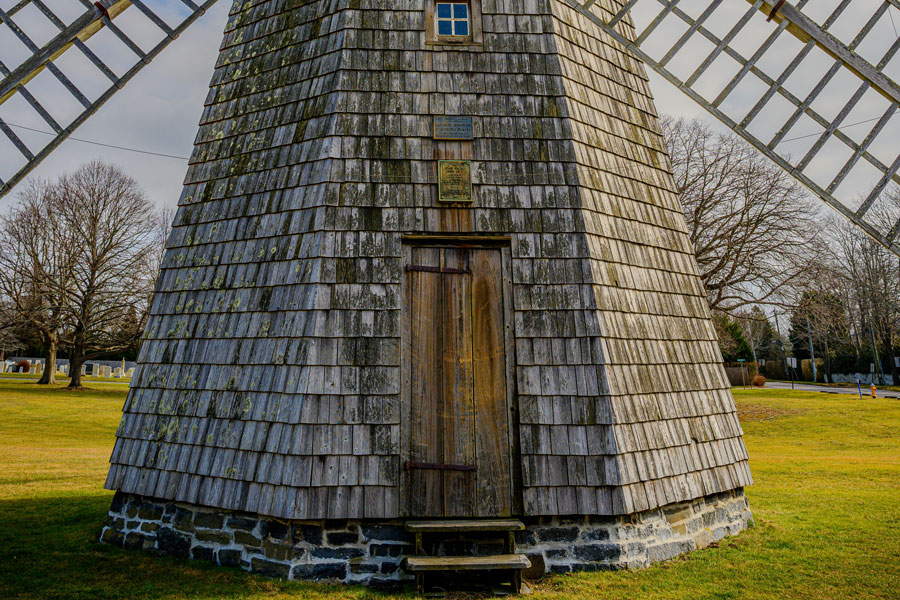
The James Corwith Grist Windmill, also known as the Windmill at Water Mill, is one of Long Island’s most recognizable historic landmarks. Standing along Montauk Highway (Route 27A) in the hamlet of Water Mill, this shingled wooden windmill has greeted travelers to the Hamptons for more than two centuries. Built around 1800 and moved to its present location in 1813, the Corwith Windmill reflects the agricultural ingenuity of early Long Islanders who harnessed coastal winds to grind grain for local farms. Today it remains a beloved roadside icon and a centerpiece of the Water Mill Museum campus, helping interpret the area’s rural history.
History
The story of the Corwith Windmill begins around 1800, when the smock-style windmill was constructed on Hog Neck (now North Haven, near Sag Harbor). In 1813, it was moved several miles south to Water Mill, where James Corwith, a local farmer and miller, set it beside the community’s long-established watermill – traditionally dated to the 17th century and closely tied to the hamlet’s name.
For more than 70 years, the windmill’s wooden sails converted steady coastal breezes into mechanical power for grinding wheat, corn, and other grains. Like many Long Island mills of its era, it was built in the smock design: an eight-sided, wood-shingled tower topped by a rotating cap that could be turned to face the wind.
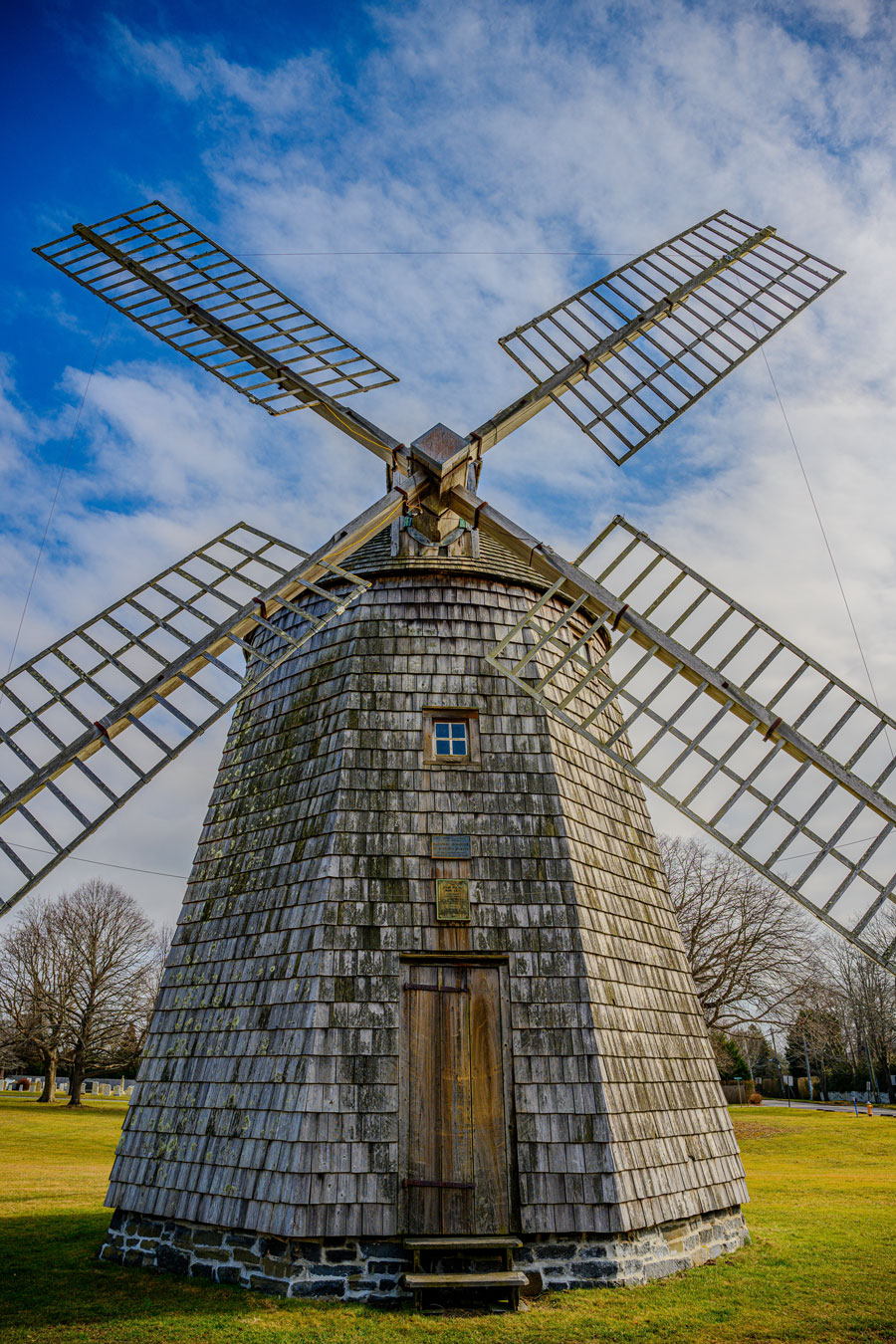
Operations gradually ceased in the late 19th century as newer milling methods and industrial power sources became more efficient. Unlike many historic mills that were lost over time, the Corwith Windmill survived through local stewardship and later preservation work. In the 20th century, restoration efforts helped secure the structure’s future and strengthened its role within what is now the Water Mill Museum.
Today, the mill is widely recognized as one of the best-known surviving historic windmills on Long Island’s South Fork. It was added to the National Register of Historic Places in 1978 and continues to serve as a visual reminder of the region’s pre-resort farming landscape.
Visitor Information
The windmill is part of the Water Mill Museum campus in the heart of Water Mill. Museum exhibits, tours, and special programs generally vary by season, while the windmill itself remains a prominent exterior landmark visible from the roadway throughout the year.
The site is easy to find along Route 27 (Montauk Highway), making it a convenient stop for travelers heading between Southampton, Bridgehampton, and East Hampton. Limited parking may be available nearby, and photography from public areas is especially popular in the softer light of morning and late afternoon.
Because hours, interior access, and event programming may change, visitors should check ahead before making a dedicated trip. For current museum information, seasonal openings, and special events, visit watermillmuseum.org.
Windmill at Water Mill
Key Facts & Details
| Detail | Information |
|---|---|
| Built | ca. 1800 (moved to Water Mill in 1813) |
| Associated With | James Corwith and the Corwith family |
| Type | Smock windmill (wood-shingled tower with rotating cap) |
| Location | 41 Old Mill Road, Water Mill, NY 11976 |
| County / Town | Suffolk County – Town of Southampton |
| Operated Until | Late 19th century |
| Current Use | Historic landmark on the Water Mill Museum campus |
| Listed on NRHP | December 27, 1978 (Ref. #78001919) |
| Stewardship | Water Mill Museum |
| Significance | Prominent surviving South Fork windmill tied to Water Mill’s early milling history |
The James Corwith Grist Windmill endures as a powerful reminder of the Hamptons before the resort era – when wind and water helped power the local economy and milling was central to everyday life. Its weathered shingles, heavy internal framing, and commanding sails still evoke the craftsmanship and practicality of early Long Island. Whether you pause for a roadside photo or plan a museum visit, the Windmill at Water Mill remains one of the South Fork’s most enduring historic sights.
Are you ready for fall on Long Island? Check out these local seasonal guides:
🍎 Apple Picking | 🍂 Fall Festivals & Farm Activities | 👻 Haunted Houses | 🎃 Pumpkin Picking