
Brookhaven National Laboratory
Brookhaven National Laboratory (BNL), located in Upton, New York, within the Town of Brookhaven, is one of the nation’s premier scientific research institutions. Managed and operated by Brookhaven Science Associates for the U.S. Department of Energy’s Office of Science, the lab supports major research programs in physics, chemistry, biology, energy science, environmental science, and applied technology.
Established in 1947 on the grounds of the former Camp Upton Army installation, BNL has grown into a major center of innovation that draws scientists, engineers, students, and research users from around the world. The campus is home to large-scale scientific instruments and user facilities, including particle accelerators, advanced light sources, high-performance computing resources, and specialized laboratories that are significant on a national and international scale.
History
Brookhaven National Laboratory was created in the years following World War II, when federal leaders and research universities recognized the importance of long-term scientific collaboration. What began under the nation’s early atomic-energy framework later became part of the modern U.S. Department of Energy system, and Brookhaven quickly emerged as a leader in nuclear science, accelerator science, and high-energy physics.
Over the decades, research carried out at Brookhaven has contributed to multiple Nobel Prize-recognized discoveries, particularly in physics and related fields. The laboratory’s mission has continued to evolve, with major work today spanning clean energy, climate science, nanotechnology, data science, medical applications, and national-scale user facilities.
Research and Facilities
Some of BNL’s most notable facilities include:
| Facility | Purpose |
|---|---|
| Relativistic Heavy Ion Collider (RHIC) | A major particle accelerator used to study the fundamental building blocks and forces of matter. |
| National Synchrotron Light Source II (NSLS-II) | A world-class synchrotron facility supporting advanced research in materials science, chemistry, biology, medicine, and engineering. |
| Center for Functional Nanomaterials (CFN) | A leading nanoscience research facility focused on the behavior and engineering of materials at the nanoscale. |
| Medical Isotope Research | Research involving isotopes and technologies that support cancer treatment, diagnostic imaging, and other medical applications. |
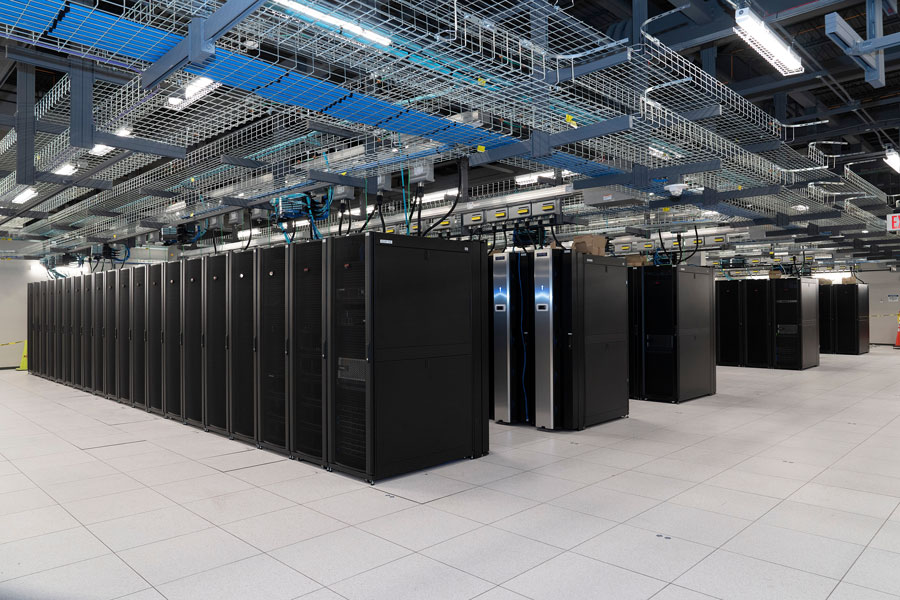
| Scientific Computing Resources | High-performance computing systems used to analyze massive scientific datasets and support advanced simulations. |
BNL also works closely with universities, hospitals, industry partners, and other national laboratories, helping discoveries move from basic research into practical applications.
Visiting Brookhaven National Laboratory
Brookhaven National Laboratory is not a conventional tourist attraction, and public access is controlled. However, the lab periodically offers lectures, educational programs, community events, and occasional public tours or open house opportunities that allow visitors to learn more about its science and facilities.
If you hope to visit, it is best to check the official Brookhaven National Laboratory website ahead of time for current event listings, visitor procedures, and security requirements. Hours, access rules, identification requirements, and program availability may change, and casual drop-in sightseeing is generally not the focus of the site.
Impact on Long Island
BNL is one of Suffolk County’s major scientific employers, supporting thousands of jobs in research, engineering, computing, operations, and technical services. Its presence has helped position Long Island as an important center for advanced research, while also contributing to the regional economy through contracts, construction, education partnerships, and collaboration.
Beyond economics, the lab plays an important role in addressing global challenges, from energy and environmental science to medicine and fundamental physics. For residents of Brookhaven Town and the wider region, Brookhaven National Laboratory remains both a local asset and an institution of worldwide scientific significance.
Vicinity of the National Laboratory
Snapshot Quick Facts
| Category | Details |
|---|---|
| Founded | 1947 |
| Location | Upton, Town of Brookhaven, Suffolk County, New York |
| Operated By | Brookhaven Science Associates for the U.S. Department of Energy |
| Workforce | Roughly 3,000 employees, plus visiting scientists, users, and students |
| Major Facilities | RHIC, NSLS-II, CFN, and major scientific computing resources |
| Public Access | Limited; educational programs and special events vary by schedule and security requirements |
| Notable Contributions | Research associated with Nobel Prize-recognized discoveries in physics and related fields |
Brookhaven National Laboratory is far more than a research campus; it is a cornerstone of scientific discovery on Long Island. Its work has advanced human understanding in fields ranging from particle physics and medicine to energy, computing, and environmental science. For the Town of Brookhaven and beyond, the lab remains an engine of innovation, education, and regional pride.
“`