
Williamsburg Bridge
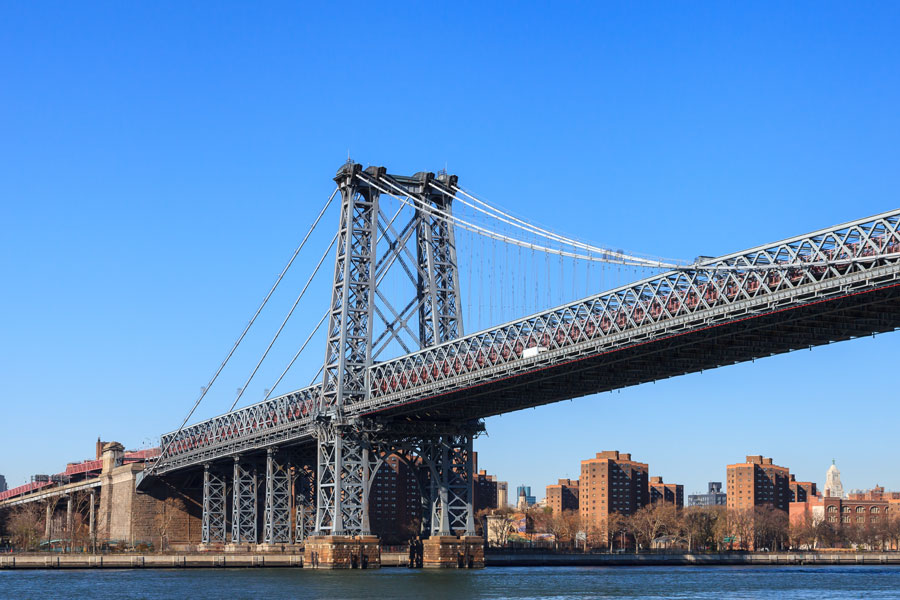
The Williamsburg Bridge links the Lower East Side of Manhattan with Williamsburg, Brooklyn over the East River. Opened in 1903, it is one of New York City’s major East River crossings and remains an important route for drivers, subway riders, cyclists, and pedestrians traveling between Manhattan and the western end of Long Island.
History
- The Williamsburg Bridge opened on December 19, 1903, during a period of rapid growth in New York City and Brooklyn.
- At the time of its completion, it was among the longest suspension bridges in the world and helped transform Williamsburg into a more directly connected part of the city.
- The bridge became especially important for immigrant and working-class communities traveling between Manhattan’s Lower East Side and Brooklyn’s waterfront neighborhoods.
- Major rehabilitation work in the late twentieth century restored and strengthened the bridge after decades of heavy use.
Design & Features
- Type: suspension bridge with steel towers and a large central span over the East River.
- Main span: about 1,600 ft; total length: about 7,308 ft.
- Connects: Delancey Street on Manhattan’s Lower East Side with Broadway and the Williamsburg area of Brooklyn.
- Traffic: carries motor vehicles, pedestrians, bicycles, and subway trains.
- Subway service: the J, M, and Z lines use the bridge between Manhattan and Brooklyn.
- Toll: Free to cross the bridge itself.
Why it matters for Long Island travelers
Brooklyn occupies the western end of Long Island, and the Williamsburg Bridge is one of the key links between Brooklyn and Manhattan. For Long Island travelers heading into the Lower East Side, SoHo, Chinatown, or nearby Downtown Manhattan neighborhoods, the bridge offers a direct toll-free route from Brooklyn into Manhattan.
The Williamsburg Bridge is also important for transit riders because it carries subway service between Brooklyn and Manhattan. For visitors exploring Williamsburg’s restaurants, nightlife, waterfront parks, and cultural attractions, the bridge provides both a practical connection and a scenic East River crossing.
Nearby Landmarks
- Williamsburg waterfront for skyline views, restaurants, nightlife, and East River scenery
- Domino Park for riverfront paths, open space, and views of Manhattan
- Marsha P. Johnson State Park for waterfront recreation and city views in Williamsburg
- Lower East Side for historic streets, museums, restaurants, music venues, and nightlife
- Katz’s Delicatessen, Essex Market, and nearby Lower Manhattan attractions on the Manhattan side
The Williamsburg Bridge
Quick Facts
| Crosses | East River |
| Connects | Manhattan Lower East Side ↔ Brooklyn Williamsburg |
| Opened | December 19, 1903 |
| Design | Suspension bridge with steel towers |
| Main span / Total length | About 1,600 ft / about 7,308 ft |
| Subway service | J, M, and Z trains |
| Walk & bike access | Pedestrian and bicycle access is available; follow posted signs and current routing |
| Vehicle access | Motor vehicles use the bridge; traffic rules and restrictions may vary |
| Toll | No toll |
| Best times to visit | Early morning, late afternoon, and sunset are popular for skyline views and photography |
Key facts compiled from public historical and municipal sources; access, traffic patterns, subway service, and pedestrian or bicycle routing can change, so check current conditions before visiting.
Q&A – Williamsburg Bridge
Q: Where is the Williamsburg Bridge?
A: The Williamsburg Bridge crosses the East River between Manhattan’s Lower East Side and Williamsburg, Brooklyn.
Q: Is there a toll on the Williamsburg Bridge?
A: No. The Williamsburg Bridge is toll-free.
Q: Can you walk across the Williamsburg Bridge?
A: Yes. Pedestrians can walk across the bridge using designated access paths. Entrances and routing may change during maintenance or construction, so follow posted signs.
Q: Can you bike across the Williamsburg Bridge?
A: Yes. The bridge has bicycle access, making it a common route for cyclists traveling between Manhattan and Brooklyn.
Q: Which subway lines use the Williamsburg Bridge?
A: The J, M, and Z subway lines cross the East River on the Williamsburg Bridge between Manhattan and Brooklyn.
Q: How long is the Williamsburg Bridge?
A: The bridge is about 7,308 feet long overall, with a main span of about 1,600 feet.
Q: Is the Williamsburg Bridge older than the Manhattan Bridge?
A: Yes. The Williamsburg Bridge opened in 1903, while the Manhattan Bridge opened later, in 1909.
Q: Why is the Williamsburg Bridge important?
A: The bridge is a major East River crossing that connects Manhattan with Brooklyn, which sits on the western end of Long Island. It supports road traffic, subway service, walking, and cycling, making it one of the city’s most important multi-use bridges.
A Major East River Crossing
The Williamsburg Bridge remains one of New York City’s most useful and recognizable East River crossings. For Long Island travelers, it offers a direct connection between Brooklyn and Manhattan while also serving subway riders, cyclists, and pedestrians. Whether used for commuting, sightseeing, or exploring Williamsburg and the Lower East Side, the bridge continues to play an important role in the movement of people across New York City.
Are you ready for fall on Long Island? Check out these local seasonal guides:
🍎 Apple Picking | 🍂 Fall Festivals & Farm Activities | 👻 Haunted Houses | 🎃 Pumpkin Picking