
Booker T. Washington and Long Island Connections
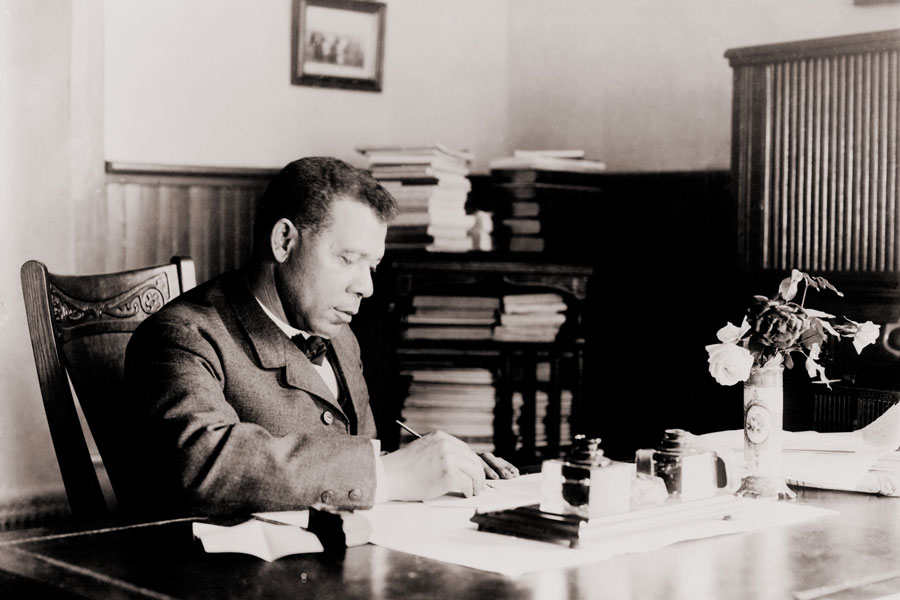
Booker T. Washington was a pioneering educator, author, and national leader whose work shaped American debates about education, opportunity, and Black advancement in the decades after emancipation. While his best-known achievements were rooted in the South, his influence also reached the New York region and Long Island through lectures, fundraising, publishing, and ideas that continued to resonate in schools, churches, and community organizations.
Early Life and Rise to Prominence
Born into slavery in Virginia in 1856, Washington rose through determination, labor, and study:
- After emancipation, he worked in salt furnaces and coal mines while pursuing an education, demonstrating remarkable persistence from an early age.
- As a teenager, he traveled hundreds of miles to attend Hampton Institute, now Hampton University, a turning point that helped launch his path as a teacher and leader.
Founder of Tuskegee Institute
Washington became the founding principal of the Tuskegee Normal and Industrial Institute, now Tuskegee University, in Alabama in 1881:
- He helped build the school from modest beginnings into one of the nation’s most important historically Black institutions.
- Tuskegee combined academic instruction, teacher training, and practical skills, reflecting Washington’s emphasis on self-reliance, institution-building, and long-term advancement.
New York and Long Island Connections
Booker T. Washington had important ties to New York, although his strongest documented associations were generally with New York City and the wider region rather than a single preserved landmark on Long Island:
- He traveled regularly to New York to lecture, meet publishers and donors, and raise support for Tuskegee, working with nationally known allies including Andrew Carnegie and Julius Rosenwald.
- His speeches and writings circulated widely in the metropolitan area, influencing educators, churches, newspapers, and civic organizations engaged in debates about Black education and economic opportunity.
- On Long Island, Washington’s legacy is seen more through later educational initiatives, community remembrance, and Black history programming than through one major site directly associated with his daily life.
Legacy and Ongoing Inspiration
Washington’s impact continues to be studied across the country and in the New York area:
- His autobiography, Up from Slavery, remains one of the best-known works of African American life writing from the early twentieth century.
- Washington was among the most prominent Black public figures of his era; historians continue to examine both his public philosophy and his quieter support for civil rights efforts.
- Schools, civic organizations, and community programs on Long Island and beyond have used his name and ideas to promote educational opportunity, leadership, and self-improvement.
Visiting Places Connected to Booker T. Washington
Travelers interested in Booker T. Washington on Long Island will usually encounter his legacy through regional Black history institutions, lectures, and educational programming rather than a single official memorial site:
- Educational Centers: Schools, libraries, museums, and community programs across Nassau and Suffolk counties may interpret the era in which Washington lived or host related talks and exhibits.
- Historic Events: Heritage observances, lectures, and special exhibitions sometimes highlight Washington alongside other major figures in African American history. Programming varies, so check ahead before visiting.
- Major National Sites: For the most direct interpretation of his life, travelers often look to Booker T. Washington National Monument in Virginia and Tuskegee University in Alabama. Hours, tours, and visitor policies may change by season or institution.
Booker T. Washington’s life story spans enslavement, self-education, national leadership, and a legacy that still shapes conversations about opportunity, strategy, and institution-building. For Long Island visitors, his story is best understood as part of a wider regional and national history of education, civic life, and African American leadership.
Booker T. Washington Quick Info
| Fact | Details |
|---|---|
| Birth/Death | 1856, Franklin County, Virginia – 1915, Tuskegee, Alabama |
| Long Island Connections | Influence on regional education, civic life, and Black history programming; strongest direct ties were to the broader New York area |
| Key Achievements | Founded Tuskegee Normal and Industrial Institute, became a nationally known educator, author, and speaker |
| Notable Writings | Up from Slavery, The Future of the American Negro |
| Famous Quote | “Cast down your bucket where you are.” |
| Civil Rights Impact | Major early leader in Black education and economic advancement; his strategy remains widely discussed by historians |
| Fun Fact | His 1901 White House dinner with Theodore Roosevelt drew national attention and intense public debate |
Booker T. Washington’s legacy of education, leadership, and institution-building continues to inspire communities, including those on Long Island. His story remains a powerful point of reference for resilience, civic engagement, and the pursuit of lasting progress.