
Hempstead Plains
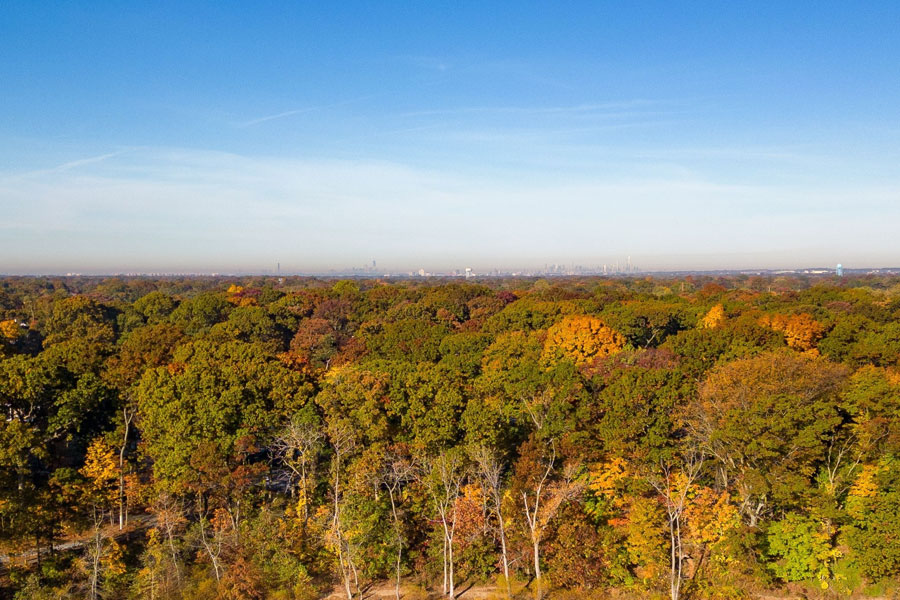
The Hempstead Plains were once among the most remarkable natural landscapes on Long Island, stretching across large portions of central Nassau County and forming a rare native grassland often described as one of the few prairie-like ecosystems east of the Appalachian Mountains. Before suburban development transformed much of central Nassau County, the plains consisted of broad open grasslands, rolling meadows, scattered wildflowers, and largely treeless expanses that extended for miles. Today, only fragments of this unusual ecological environment remain, but the Hempstead Plains still hold major historical, environmental, and scientific importance.
Historically, the plains influenced agriculture, transportation, aviation, military activity, and suburban growth throughout Long Island. Their unusually flat terrain later became associated with some of the earliest aviation activity in the United States, including flights connected to nearby airfields such as Roosevelt Field and the broader Mitchel Field area. Although modern residential and commercial development has dramatically altered the region, preserved sections of the Hempstead Plains still offer insight into what much of central Nassau County once looked like before large-scale suburbanization.
Geography & Natural Environment
The Hempstead Plains historically covered tens of thousands of acres across what is now central Nassau County, including portions of communities such as Hempstead, Garden City, Westbury, East Meadow, Uniondale, and surrounding areas. Unlike much of Long Island’s wooded landscape, the plains were largely open grasslands shaped by glacial deposits, soil conditions, seasonal fire patterns, and grazing.
The ecosystem supported a wide variety of grasses, birds, insects, and plant species adapted to dry, open conditions. Scientists and conservationists have long considered the Hempstead Plains ecologically significant because native prairie-like grasslands are exceptionally rare in the northeastern United States.
Historical Importance
For centuries, the Hempstead Plains played an important role in the development of Long Island. Indigenous communities used the open land for hunting, movement, and resource gathering long before European settlement. During the colonial period, the plains became associated with farming, grazing, and horse breeding because of the region’s open terrain.
By the late 19th and early 20th centuries, the flat expanses of the plains attracted racing events, military training activity, and eventually aviation pioneers. The nearby Roosevelt Field area became internationally known during the early days of flight, including its connection to Charles Lindbergh and transatlantic aviation history.
Aviation & Development
The open terrain of the Hempstead Plains made the area well suited to early airfields and aviation testing grounds. Several historic aviation and military sites emerged on or near the plains during the early 1900s, helping establish Long Island as a major center of aerospace innovation.
As suburbanization accelerated after World War II, much of the original plains landscape disappeared beneath residential neighborhoods, highways, shopping centers, schools, office parks, and industrial development. The transformation of Nassau County into one of America’s earliest major suburbs dramatically reduced the size of the original grassland ecosystem.
Preserved Sections of the Hempstead Plains
Although most of the original plains have been lost to development, several preserved sections still exist and are studied for their environmental importance. The best-known surviving remnant is the Hempstead Plains Preserve, associated with the Nassau Community College area in central Nassau County.
These protected areas help conserve native grasses and plant species while supporting education related to ecology, conservation, and Long Island history. Environmental organizations, researchers, and land managers continue efforts to restore portions of the habitat and increase public awareness of the Hempstead Plains ecosystem.
Visiting Today
For visitors, the modern Hempstead Plains experience is centered on the preserve and its surrounding educational landscape rather than the vast historic grassland that once covered much of the region. Trails, interpretive features, guided walks, and access details may vary by season, habitat management activity, weather, or campus-area operations, so it is wise to check ahead before visiting. Because the site is a sensitive restoration landscape, visitors should also follow posted rules and stay on designated paths where provided.
Ecological Significance
The Hempstead Plains are widely recognized as one of the most environmentally distinctive regions in New York State. The grassland ecosystem once supported species rarely found elsewhere in the Northeast, including specialized grasses, wildflowers, butterflies, and ground-nesting birds.
Conservationists often describe the plains as an ecological treasure because they represent one of the last remnants of a once-expansive native grassland landscape on Long Island. Restoration projects, controlled burns, invasive-species management, and habitat preservation efforts continue in order to maintain what remains of this landscape.
Preserve Map & Vicinity
Note: The map above primarily reflects the modern Hempstead Plains Preserve, a small protected remnant of the original Hempstead Plains ecosystem. Historically, the Hempstead Plains stretched across tens of thousands of acres in central Nassau County, including parts of what are now Hempstead, Garden City, East Meadow, Uniondale, Westbury, and nearby communities.
Key Facts & Details
| Location | Central Nassau County, Long Island, New York |
|---|---|
| Region Type | Historic native grassland and prairie-like ecosystem |
| Known For | Rare grassland habitat, aviation history, and ecological significance |
| Historic Size | Commonly described as stretching across tens of thousands of acres; exact historic boundaries vary by source |
| Major Communities | Hempstead, Garden City, East Meadow, Westbury, Uniondale, and surrounding areas |
| Environmental Importance | Often cited as one of the few prairie-like ecosystems east of the Appalachian Mountains |
| Associated Aviation History | Roosevelt Field, the Mitchel Field area, and early Long Island aviation development |
| Preserved Areas | Hempstead Plains Preserve and other small remnant or restoration areas |
| Modern Land Use | Suburban residential, commercial, educational, and transportation development |
| Ecological Features | Native grasses, wildflowers, prairie species, and rare habitat remnants |
| County | Nassau County |
| Region | Long Island, New York |
| Visitor Notes | Access conditions, programming, and on-site features may vary by season; check ahead before visiting and respect posted habitat protections |
Although much of the original Hempstead Plains has disappeared beneath modern suburban development, its legacy remains deeply connected to the environmental, historical, and cultural identity of Long Island. From grassland ecology and aviation history to suburban transformation and conservation efforts, the Hempstead Plains continue to represent one of the island’s most fascinating and historically important landscapes.
Are you ready for fall on Long Island? Check out these local seasonal guides:
🍎 Apple Picking 🍓 Strawberry Picking 🎃 Pumpkin Picking 👻 Haunted Houses 🍂 Farm Festivals