

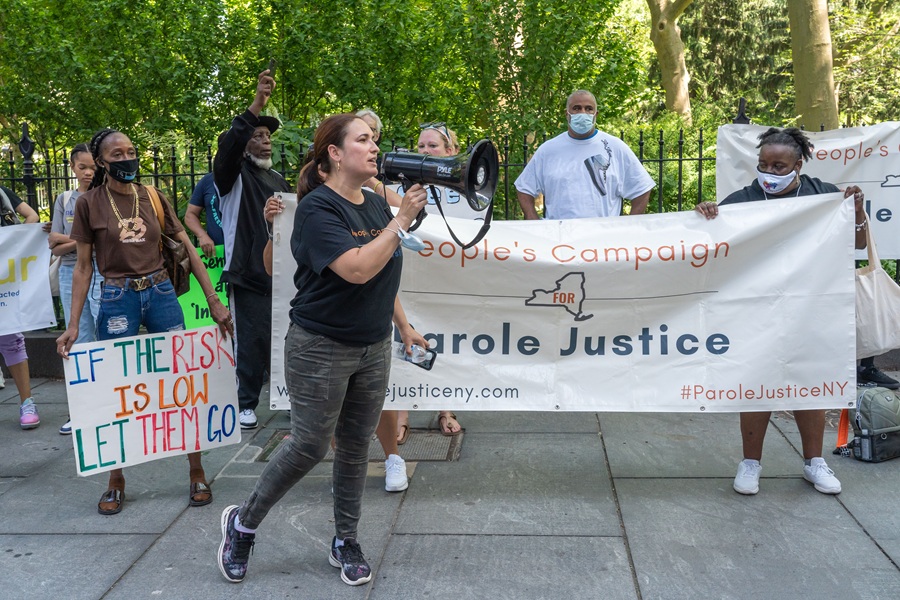
NEW YORK, NY – A growing debate is unfolding in Albany as several proposed criminal justice reform bills advance through the legislative process, drawing strong reactions from Long Island officials and victims’ advocates who say the measures could significantly alter how serious criminal sentences are carried out in New York.
At the center of the controversy are four bills – commonly referred to as Elder Parole, the Earned Time Act, the Fair and Timely Parole Act, and the Second Look Act – all of which aim to expand opportunities for incarcerated individuals to have their sentences reduced or reconsidered under certain conditions. Supporters frame the proposals as part of a broader push toward fairness, rehabilitation, and addressing long-term incarceration trends, while critics argue the real-world impact could be far more consequential.
Raymond A. Tierney has emerged as one of the most vocal opponents, warning that the legislation, despite its reform-oriented language, could ultimately open the door for individuals convicted of violent crimes to seek earlier release. He has pointed to the potential for parole eligibility and sentence reductions to apply more broadly than many people may realize, raising concerns about public safety and the long-term implications for communities across the state.
Those concerns have been echoed by Edward P. Romaine, who has criticized the proposals as prioritizing policy ideology over the interests of law-abiding residents and victims. Together, their statements reflect a broader unease among some local leaders who believe that once a sentence is handed down, it should provide a level of certainty for victims and their families.
The legislation itself is part of a larger shift in how criminal justice is being approached in New York. The Elder Parole proposal would allow certain incarcerated individuals to become eligible for parole after reaching a specific age and serving a portion of their sentence. The Earned Time Act would expand the ability of inmates to reduce their sentences through participation in programs and good behavior. The Fair and Timely Parole Act would adjust how parole boards evaluate candidates, placing greater emphasis on rehabilitation rather than the original offense. The Second Look Act would give courts the ability to revisit sentences after a set number of years, even in cases involving serious crimes.
For supporters, these measures represent a more modern and flexible approach to justice, one that recognizes the potential for change and seeks to address concerns about aging prison populations and the cost of long-term incarceration. For opponents, however, the possibility of reopening cases and reconsidering sentences raises difficult questions about accountability and whether justice, once delivered, should remain final.
Much of the emotional weight behind the opposition has come from victims’ families, some of whom have traveled to Albany to make their voices heard. Their concerns go beyond policy and into deeply personal territory, focusing on the fear of having to revisit traumatic events and the uncertainty that comes with knowing a sentence could be reduced or re-evaluated years later.
One of the most emotional moments in the debate came from a Long Island mother who lost her son to a violent crime, describing the lasting impact that sentencing had on her ability to begin moving forward. She recalled sitting in court as the sentence was handed down, hoping it would reflect the severity of the crime and provide some sense of stability after her life had been permanently altered. When that sentence was issued, she said it marked the first time her family could begin to process their loss.
The possibility that laws could now reopen those outcomes, allowing sentences to be reduced or revisited, has left many families feeling as though that sense of justice is being taken away. For victims’ advocates, the concern is not theoretical. They argue that while policy discussions often focus on rehabilitation and second chances, there is no equivalent opportunity for the victims whose lives were taken, or for the families left behind to live with that loss indefinitely.
At the same time, supporters of the bills continue to emphasize that the proposals are not about automatic release, but rather about creating pathways for review based on behavior, time served, and individual circumstances. They argue that the current system does not always account for personal growth or change, and that carefully structured reforms can improve outcomes without compromising safety.
As the debate continues in Albany, the outcome remains uncertain, but the issue is clearly resonating far beyond the state capital. For Long Island residents, where local leaders and families have taken an active role in the conversation, the stakes are being closely watched. The decisions made in the coming months could shape not only sentencing policies, but also how justice is defined and applied across New York moving forward.
Key Facts and Details
| Topic | Details |
|---|---|
| Location of Legislative Action | Albany, New York |
| Key Officials Opposing Bills | Suffolk County District Attorney Raymond A. Tierney; Suffolk County Executive Edward P. Romaine |
| Major Bills Under Debate | Elder Parole, Earned Time Act, Fair and Timely Parole Act, Second Look Act |
| Core Concern | Potential early release or sentence reductions for individuals convicted of violent crimes |
| Supporters’ Position | Emphasis on rehabilitation, fairness, and reducing long-term incarceration |
| Opponents’ Position | Public safety risks and emotional impact on victims’ families |
| Public Reaction | Strong responses from victims’ advocates and local officials |
| Current Status | Bills under consideration by New York State lawmakers |
Frequently Asked Questions About NY Parole Reform Bills
What are the parole reform bills being debated in New York?
The bills include the Elder Parole proposal, the Earned Time Act, the Fair and Timely Parole Act, and the Second Look Act. Each measure aims to expand opportunities for incarcerated individuals to have their sentences reduced or reviewed under certain conditions.
What is the Elder Parole bill in New York?
The Elder Parole proposal would allow certain inmates who have reached a specific age and served a portion of their sentence to become eligible for parole, regardless of their original sentence structure.
What does the Earned Time Act do?
The Earned Time Act would allow incarcerated individuals to reduce their sentences by participating in programs, maintaining good behavior, and meeting other eligibility requirements.
Why are some officials opposing these bills?
Officials including Raymond A. Tierney argue the bills could lead to earlier release of individuals convicted of violent crimes, raising concerns about public safety and the impact on victims’ families.
What is the Second Look Act?
The Second Look Act would allow courts to revisit and potentially modify sentences after a set number of years, even in serious criminal cases.
Are these bills law yet?
No, the bills are currently under consideration by lawmakers in Albany and have not yet been enacted into law.
Why is this issue getting so much attention?
The debate involves competing priorities – criminal justice reform versus public safety and victims’ rights – making it a highly emotional and politically significant issue across New York.
Are you ready for fall on Long Island? Check out these local seasonal guides:
🍎 Apple Picking 🍓 Strawberry Picking 🎃 Pumpkin Picking 👻 Haunted Houses 🍂 Farm Festivals