
‘The Age of Disclosure’ Sparks New Debate Over Alleged Decades-Long U.S. UFO Secrets, Cover-up, Global Race for Non-Human Tech
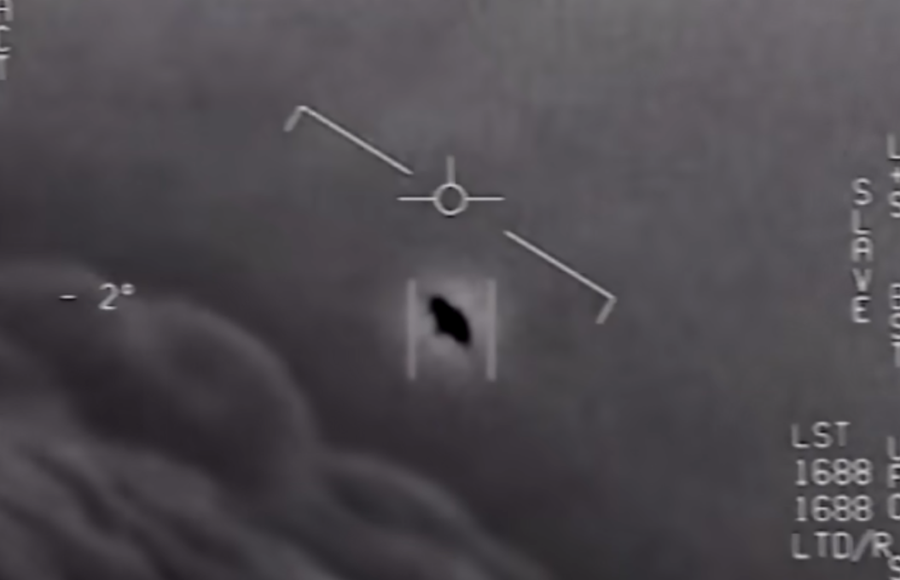
NEW YORK, NY – A new feature-length documentary, The Age of Disclosure, is trying to push the UFO debate into a far more explosive arena – alleging that multiple U.S. administrations have hidden evidence of “non-human intelligence” for roughly 80 years while world powers compete to reverse-engineer recovered technology.
Directed and produced by Dan Farah, a veteran Hollywood producer making his documentary debut, the 109-minute film weaves together interviews with 34 current and former officials from the U.S. military, intelligence agencies and Congress. It premiered in March at the South by Southwest (SXSW) Film Festival and rolled out to a limited Oscar-qualifying theatrical run and global release on Amazon Prime Video on November 21, 2025.
Farah says he spent more than two years developing the project in secret, quietly recording interviews with officials who agreed to go on camera about what they describe as decades of hidden programs dealing with unidentified anomalous phenomena (UAP), the current government term for what were once simply called UFOs. The trailer alone drew millions of views and helped turn the film into one of the most heavily discussed non-fiction releases of the year.
Central claim: an “80-year” covert program
At the core of The Age of Disclosure is a sweeping allegation: that since at least 1947, elements of the U.S. government and its contractors have quietly recovered non-human craft, studied their technology and kept both Congress and the public largely in the dark.
The film is narrated by Luis Elizondo, a former Defense Department official who has previously said he worked with the Pentagon’s Advanced Aerospace Threat Identification Program (AATIP). In the documentary, Elizondo and former AATIP associates Hal Puthoff and Eric Davis describe what they call a secret “Legacy Program” – an umbrella term for long-running efforts to locate, retrieve and analyze anomalous craft and materials, allegedly involving both crash sites and “off-world” technology.
Several interviewees, including former U.S. government UAP task force head Jay Stratton, go further, asserting they have personally seen non-human craft and even non-human beings, and claiming that the United States, Russia and China are locked in a Cold War-style race to unlock whatever strategic advantages such technology could provide.
The film also highlights reports of UAP activity around sensitive U.S. sites. Secretary of State Marco Rubio – whose interview was recorded while he was still a U.S. Senator – recounts briefings about unknown objects repeatedly appearing over restricted nuclear facilities and emphasizes that officials have concluded these objects are not American.
High-profile cast of insiders
Beyond Elizondo and Stratton, The Age of Disclosure features a roster of figures who have already been central to the recent wave of official and semi-official UAP disclosures.
Among those appearing in the film are:
- Marco Rubio, now Secretary of State and formerly vice chair of the Senate Intelligence Committee
- Senator Kirsten Gillibrand and Senator Mike Rounds, who co-sponsored recent UAP transparency legislation
- Former Director of National Intelligence James Clapper
- Former Deputy Assistant Secretary of Defense for Intelligence Chris Mellon
Collectively, they describe a pattern of compartmentalized programs, limited briefings and, in their view, a long history of treating UAP reports as too sensitive or too politically volatile for wide disclosure. Several argue that, in recent years, whistleblower complaints and new laws have forced some of this material into the open.
Farah and his interviewees frame the film as a wake-up call, contending that the public has been shielded from the true scope of UAP encounters and that voters, scientists and lawmakers should be pressing harder for formal declassification and scientific study.
A documentary arriving in a changed UFO landscape
The Age of Disclosure lands after several years in which UFOs – rebranded as UAPs – have moved from fringe speculation into mainstream policy debates.
Since 2020, Congress has mandated regular unclassified UAP reports from the intelligence community, and the Pentagon has stood up multiple offices to analyze unexplained incidents recorded by military personnel. A 2021 report from the Director of National Intelligence acknowledged dozens of encounters that could not easily be explained but stopped short of endorsing any extraterrestrial interpretation. NASA also empaneled an independent UAP study group, which issued its own report in 2023 calling for better data and more rigorous analysis.
Whistleblower David Grusch’s 2023 testimony to Congress – in which he alleged the existence of secret crash-retrieval and reverse-engineering programs – helped fuel online speculation and gave advocates for fuller disclosure new momentum. The documentary builds on that moment, presenting Grusch’s claims as part of a much longer, hidden history, though he is not the primary focus of the film.
Strong reactions – and sharp skepticism
Reaction to The Age of Disclosure has been polarized, with some reviewers calling it the most comprehensive on-camera case yet assembled for a UAP cover-up, and others arguing that it does not offer the kind of verifiable evidence that would be required to transform extraordinary claims into accepted fact.
Coverage in outlets such as The Washington Post and The Guardian has emphasized the sheer number of high-ranking voices willing to speak on camera, noting that 34 senior figures from the military, intelligence agencies and Congress share their accounts in the film. At the same time, these reports underline that viewers are largely being asked to trust testimony and second-hand descriptions rather than being shown documents, hardware or other primary evidence.
Film critics have offered mixed reviews. Some have praised the documentary’s restrained visual style and careful pacing, arguing that it treats its subjects more seriously than many earlier UFO productions. Others have described it as essentially a polished version of arguments that have circulated for years in UAP circles, saying that despite the high-level interviewees, the film doesn’t deliver new, independently verifiable proof that would resolve the question of whether non-human craft are actually present on Earth.
Skeptics in the scientific community have been more blunt. Joshua Semeter, a Boston University professor who served on NASA’s UAP study panel, told his university’s news service that he has seen no evidence confirming a government cover-up of extraterrestrial visitors and stressed that anecdotal testimony alone cannot meet scientific standards of proof.
Michael Shermer, publisher of Skeptic magazine, wrote that the film relies heavily on personal stories and analogized its evidentiary record to long-running claims about other unproven phenomena, arguing that without clear, shareable data, the case remains unconvincing.
What the film could change – and what it doesn’t
Even critics acknowledge that The Age of Disclosure documents a real shift: high-ranking officials now feel comfortable talking about UAPs in public, on camera, in a way that would have been difficult to imagine a decade ago. The film captures senior figures describing unknown objects over nuclear facilities, discussing alleged crash-retrieval programs, and warning about a technological race with rival nations – material that, regardless of one’s conclusions, underscores how seriously some inside government are now treating the issue.
What the documentary does not provide, at least so far, is the kind of declassified documentation or physical evidence that would allow outside scientists, journalists or the public to independently evaluate most of its central claims. Farah and several interviewees say restrictions on classified material make that impossible in the short term and urge viewers to press lawmakers for more transparency.
Key Facts & Details
| Detail | Information |
|---|---|
| Title | The Age of Disclosure |
| Type | Feature documentary (non-fiction) |
| Director / Producer | Dan Farah |
| Running time | 109 minutes |
| Premise | Alleges an 80-year government cover-up of non-human intelligence and recovered craft |
| Key participants | Luis Elizondo, Jay Stratton, Chris Mellon, Marco Rubio, Kirsten Gillibrand, James Clapper, others (34 officials total) |
| World premiere | SXSW Film Festival, March 9, 2025 |
| Wide release | Limited theatrical run + Amazon Prime Video streaming starting Nov. 21, 2025 |
| Central claims | Secret “Legacy Program,” crash retrievals, reverse-engineering race among major nations |
| Main criticisms | Heavy reliance on testimony; lack of publicly verifiable physical or documentary evidence |
Top Questions & Answers: The Age of Disclosure Documentary
What is The Age of Disclosure?
The Age of Disclosure is a 2025 feature documentary alleging that the U.S. government has concealed evidence of non-human intelligence and recovered craft for roughly 80 years. It includes interviews with 34 former and current officials from the military, intelligence agencies, and Congress.
Who made the film?
The documentary was directed and produced by Dan Farah, known for past work as a Hollywood producer. This is his first documentary project, which he reportedly developed in secret over two years.
What is the central claim of the documentary?
The film asserts the existence of a classified, multi-decade crash-retrieval and reverse-engineering effort referred to as a “Legacy Program.” Participants claim the U.S., Russia, and China are competing to understand and exploit recovered non-human technology.
Who appears in the documentary?
Notable interviewees include former AATIP officials Luis Elizondo and Jay Stratton, former Deputy Assistant Secretary of Defense Chris Mellon, former DNI James Clapper, Senators Kirsten Gillibrand and Mike Rounds, and Marco Rubio (interviewed before becoming Secretary of State).
Where and when did it premiere?
The film debuted at the SXSW Film Festival in March 2025 and later received a limited theatrical run. It became available globally on Amazon Prime Video on November 21, 2025.
Does the film provide any physical evidence of extraterrestrial technology?
No. The documentary relies heavily on testimony and personal accounts. It does not present physical materials, declassified documents, or verifiable hardware supporting claims of recovered craft.
How have experts reacted?
Reactions are mixed. Advocates say the number of high-ranking officials willing to speak openly is unprecedented. Skeptics—particularly in academia—argue the film lacks empirical evidence and leans too heavily on witness statements.
Does the film reference nuclear facility incidents?
Yes. Several interviewees, including Marco Rubio, describe repeated UAP activity around U.S. nuclear sites. Rubio stresses these objects were determined “not to be ours,” according to his briefings.
Is this connected to David Grusch’s whistleblower testimony?
Indirectly. While Grusch is not the focal point of the film, his 2023 claims about crash-retrieval programs helped pave the way for renewed public interest and congressional involvement, which the documentary builds upon.
Why is the documentary generating so much attention?
Because it arrives at a time when Congress, the Pentagon, and NASA have all launched unprecedented UAP transparency efforts. The film positions itself as a bridge between whistleblower testimony and mounting political pressure for deeper declassification.
Are these claims proven?
No. Even the film’s strongest supporters acknowledge that the allegations remain unverified. Without released documents, materials, or independent testing, the claims remain assertions—even if made by high-level insiders.
What does the documentary call for?
The filmmakers and several interviewees urge lawmakers, scientists, and the public to push for broader declassification, formal investigations, and scientific study of UAP materials they say exist inside restricted programs.
Are you ready for fall on Long Island? Check out these local seasonal guides:
🍎 Apple Picking | 🍂 Fall Festivals & Farm Activities | 👻 Haunted Houses | 🎃 Pumpkin Picking