
Coney Island, Brooklyn
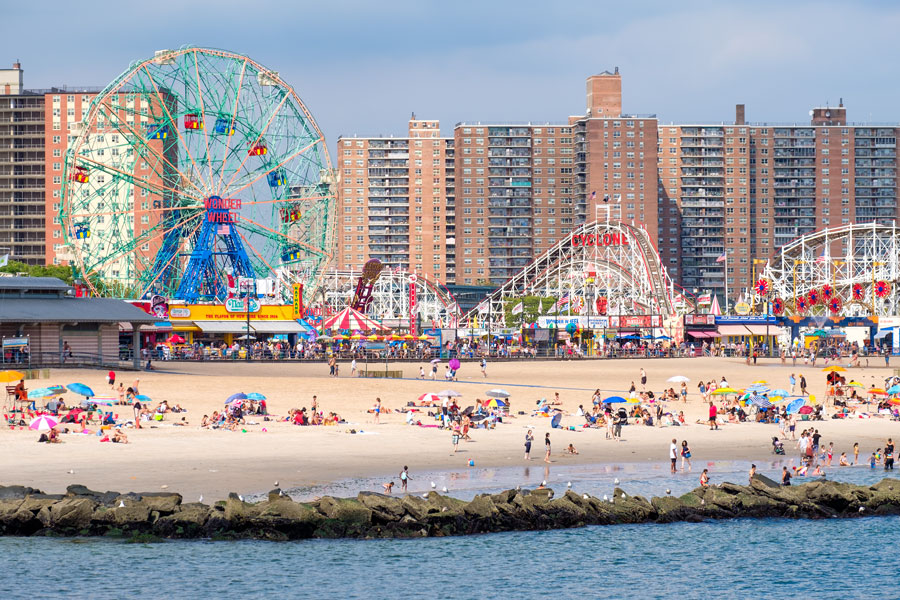
Coney Island is New York City’s classic seaside playground at the southern edge of Brooklyn, where a broad Atlantic beach, the historic Riegelmann Boardwalk, amusement rides, restaurants, entertainment venues, and distinctive landmarks come together along one of the most recognizable stretches of urban shoreline in the United States.
For generations, Coney Island has been associated with summer in New York City. The Cyclone roller coaster, Wonder Wheel, Nathan’s Famous, New York Aquarium, seasonal amusement parks, baseball at Maimonides Park, and annual traditions continue to attract visitors, while the beach and boardwalk remain free public destinations. Much of the amusement district is concentrated around Surf Avenue and the Boardwalk, making it possible to experience many of Coney Island’s best-known attractions on foot.
History of Coney Island
Coney Island was historically separated from the rest of Brooklyn by waterways and wetlands before development gradually connected it to the surrounding mainland. During the 19th century, improved transportation helped transform the area into a seaside resort where New Yorkers could escape the crowded city for beaches, hotels, entertainment, and ocean air.
Railroads brought increasing numbers of visitors during the late 1800s, and by the turn of the 20th century Coney Island had become internationally famous for its amusement parks. Steeplechase Park, Luna Park, and Dreamland competed with elaborate rides, electric lights, unusual attractions, live entertainment, and spectacles designed to draw enormous summer crowds.
The early decades of the 20th century produced several landmarks that still define Coney Island. Deno’s Wonder Wheel opened in 1920, the Riegelmann Boardwalk debuted in 1923, and the Coney Island Cyclone began carrying riders over its wooden track in 1927. The Cyclone later became a New York City landmark and remains one of the country’s most recognizable historic roller coasters.
Coney Island declined during the decades following World War II as changing recreation habits, suburbanization, fires, redevelopment pressures, and the closure of older amusement parks altered the district. Steeplechase Park, the last of the great original amusement parks, closed in the 1960s. The neighborhood nevertheless retained its beach, boardwalk, surviving rides, and distinctive identity.
Beginning in the late 20th century and continuing into the 21st, new investment brought another period of change. Modern Luna Park revived a major amusement presence, newer rides joined surviving historic attractions, Maimonides Park brought professional baseball to the waterfront, and improvements were made to the boardwalk, public spaces, and New York Aquarium. Today’s Coney Island mixes remnants of its historic amusement era with newer attractions and an active residential Brooklyn neighborhood.
Coney Island Beach and the Riegelmann Boardwalk
The public beach and Riegelmann Boardwalk form the backbone of Coney Island’s waterfront. The broad sandy shoreline faces the Atlantic Ocean and attracts swimmers, sunbathers, walkers, photographers, and visitors simply looking to spend time beside the water. Swimming is seasonal and should only be done when lifeguards are on duty and conditions permit.
The boardwalk provides a long pedestrian route beside the beach and connects much of the amusement district. Restaurants, food stands, rides, recreation areas, plazas, and other attractions are accessible along or near the waterfront, while benches and open stretches provide views across the beach and Atlantic.
Coney Island is busiest during warm-weather weekends and holidays, when the beach, boardwalk, and amusement district can draw large crowds. Weekdays and the shoulder seasons generally provide a quieter experience, although amusement rides and seasonal businesses may operate on reduced schedules outside the summer season.
Luna Park, the Cyclone and Wonder Wheel
Amusement rides remain central to Coney Island’s identity. Luna Park in Coney Island occupies a prominent stretch of the amusement district near Surf Avenue and operates a collection of roller coasters, thrill rides, family attractions, and games. Its name recalls the original Luna Park that helped make Coney Island famous during the early 1900s, although today’s park is a modern operation.
The Coney Island Cyclone at 834 Surf Avenue is one of the district’s signature attractions. Opened in 1927, the wooden roller coaster survives as both an operating thrill ride and a physical connection to Coney Island’s early amusement history.
Deno’s Wonder Wheel Amusement Park at 3059 West 12th Street preserves another part of that heritage. Its centerpiece is the 150-foot Wonder Wheel, which opened in 1920 and has become one of the most recognizable features of the Coney Island skyline. The surrounding park includes family rides and longtime attractions such as Spook-A-Rama.
New York Aquarium
The New York Aquarium at 602 Surf Avenue adds a major educational and wildlife attraction to the Coney Island waterfront. Operated by the Wildlife Conservation Society, the aquarium presents marine animals, conservation programs, educational experiences, and exhibits including Ocean Wonders: Sharks!
The aquarium sits directly beside the boardwalk, making it easy to combine with a beach or amusement-district visit. Admission is separate from the free beach and boardwalk, and hours, timed-entry procedures, presentations, and exhibit availability can vary throughout the year.
Landmarks and Entertainment
Coney Island’s skyline includes more than amusement rides. The 250-foot Parachute Jump near Steeplechase Plaza was originally built for the 1939 New York World’s Fair before being relocated to Coney Island. It no longer operates as a ride, but the illuminated steel structure remains one of the neighborhood’s most visible landmarks.
Maimonides Park at 1904 Surf Avenue is home to the Brooklyn Cyclones and brings professional baseball to the waterfront during the warmer months. The stadium’s location near the amusement district gives games a distinctly Coney Island atmosphere, with the beach and amusement skyline close by.
Coney Island USA at 1208 Surf Avenue preserves another side of the neighborhood’s entertainment history through sideshow performances, exhibits, and programs exploring local culture and amusement traditions. The Amphitheater at Coney Island Boardwalk provides another entertainment venue, hosting concerts and special events during its operating season.
Events and Coney Island Traditions
Coney Island’s identity is reinforced by annual events that have become attractions in their own right. The Coney Island Mermaid Parade celebrates handmade costumes, art, performance, and the neighborhood’s eccentric seaside culture, typically drawing large crowds at the beginning of the summer season.
Nathan’s Famous Fourth of July Hot Dog Eating Contest is among the neighborhood’s most widely recognized traditions and brings national attention to Surf Avenue each Independence Day. The Coney Island Polar Bear Club’s New Year’s Day swim takes the opposite seasonal approach, sending participants into the Atlantic during the middle of winter as part of a longstanding local tradition.
Summer may also bring scheduled fireworks, concerts, special amusement events, and Brooklyn Cyclones baseball. Event dates, fireworks, operating schedules, and other seasonal activities can change from year to year, so visitors planning around a particular event should confirm current information before traveling.
Food and Boardwalk Dining
Food is inseparable from the traditional Coney Island experience. Nathan’s Famous at 1310 Surf Avenue remains the neighborhood’s most recognizable food destination, serving hot dogs, crinkle-cut fries, and other casual fare from the location associated with the company’s Coney Island origins.
Along the boardwalk and surrounding streets, visitors can find seasonal food stands, counters, and restaurants serving everything from funnel cakes and frozen treats to seafood, sausages, tacos, pizza, and other beach food. The choices vary by season and individual business schedules.
Visitors interested in exploring beyond the amusement district can continue east toward Brighton Beach, where the surrounding neighborhood is particularly well known for Eastern European, Caucasus, and Central Asian restaurants, bakeries, markets, and specialty food shops.
Outdoor Recreation
Although amusement rides receive much of the attention, Coney Island is also one of Brooklyn’s major outdoor recreation areas. Swimming, sunbathing, shoreline walking, surfcasting where permitted, and simply spending time on the beach remain central reasons to visit. Recreation areas along the broader waterfront also include playgrounds, courts, open sand, and other public facilities.
The boardwalk and beach approaches provide broad Atlantic views as well as some of the best perspectives on Coney Island’s amusement skyline. Photographers can capture the Wonder Wheel, Cyclone, Parachute Jump, boardwalk activity, and oceanfront within a relatively compact area.
Getting to Coney Island
Coney Island is unusually accessible for a major beach and amusement destination because several New York City subway lines terminate within walking distance of the waterfront. The Coney Island-Stillwell Avenue station is the primary transit gateway and is served by the D, F, N, and Q lines. Service patterns can change because of construction, weekend work, or other disruptions, so current transit information should be checked before traveling.
Bus routes including the B36, B68, and B74 connect Coney Island with surrounding Brooklyn neighborhoods and other transit services. Drivers generally approach the area using the Belt Parkway and local streets, although parking can become difficult on summer weekends, holidays, and major event days.
Cycling is another option, with bicycle routes connecting into the area. Rules governing bicycle use on the boardwalk can depend on posted hours and current regulations, so cyclists should follow signs and local restrictions.
Planning a Visit
The beach and boardwalk are free, but Coney Island’s major attractions operate independently. Amusement rides, New York Aquarium admission, Brooklyn Cyclones games, concerts, and certain special events have their own prices, schedules, and ticketing requirements.
Summer weekends offer the fullest version of the traditional Coney Island experience, but they also bring the largest crowds. Weekday mornings and less-busy afternoons can make it easier to explore the boardwalk and beach. Sun protection and drinking water are useful during warmer months, while a light layer can be helpful when ocean breezes develop along the waterfront.
The boardwalk includes ramps at many locations, and the Stillwell Avenue subway station generally provides elevator access. Seasonal beach-access features and accessible services may be available at selected locations. Visitors who require a particular accommodation should verify current accessibility information before arriving.
Beachgoers should follow posted New York City Parks rules and swim only when lifeguards are on duty. Restrooms and outdoor facilities are available at several locations along the waterfront, particularly during the main beach season. Ride operations, fireworks, swimming conditions, and outdoor events can all be affected by weather.
Beyond Coney Island
Coney Island sits between several distinctive southern Brooklyn neighborhoods. Brighton Beach lies immediately to the east and combines another stretch of Atlantic shoreline with a particularly strong restaurant and shopping scene. Sea Gate occupies the western end of the peninsula but is a private residential community with limited public access. Farther east, Sheepshead Bay offers marina views, waterfront dining, fishing and excursion boats, and another side of Brooklyn’s relationship with the water.
Coney Island, Brooklyn
Key Facts and Details
| Location | Southern Brooklyn, New York City |
| Primary ZIP Code | 11224 |
| Waterfront | Atlantic Ocean |
| Beach | Coney Island Beach |
| Boardwalk | Riegelmann Boardwalk, opened in 1923 |
| Historic Amusement Era | Late 19th and early 20th centuries |
| Historic Amusement Parks | Steeplechase Park, Luna Park, and Dreamland |
| Wonder Wheel | Opened in 1920 at what is now Deno’s Wonder Wheel Amusement Park |
| Coney Island Cyclone | Historic wooden roller coaster opened in 1927 |
| Parachute Jump | 250-foot former ride originally built for the 1939 New York World’s Fair |
| Major Amusement Park | Luna Park in Coney Island |
| Aquarium | New York Aquarium, 602 Surf Avenue |
| Baseball | Brooklyn Cyclones at Maimonides Park |
| Historic Food Landmark | Nathan’s Famous, 1310 Surf Avenue |
| Major Annual Events | Mermaid Parade, Nathan’s Famous Fourth of July Hot Dog Eating Contest, Polar Bear Club New Year’s Day Swim, seasonal baseball, and other summer events |
| Beach Admission | Free |
| Boardwalk Admission | Free |
| Attraction Costs | Amusement rides, aquarium admission, baseball, concerts, and some special events are separately ticketed |
| Peak Season | Late spring through early fall, with the largest crowds during summer |
| Swimming | Seasonal; swim only when lifeguards are on duty |
| Main Subway Station | Coney Island-Stillwell Avenue |
| Subway Lines | D, F, N, and Q |
| Bus Service | Includes B36, B68, and B74 routes |
| Driving Access | Belt Parkway and local Brooklyn streets |
| Nearby Areas | Brighton Beach, Sea Gate, and Sheepshead Bay |
| Known For | Beach, boardwalk, amusement rides, historic landmarks, summer events, food, and seaside entertainment |
Coney Island occupies a distinctive place in both New York City history and the larger coastal story of Long Island. Its amusement parks helped redefine popular entertainment more than a century ago, while landmarks such as the Wonder Wheel, Cyclone, Riegelmann Boardwalk, and Parachute Jump preserve pieces of that history in a waterfront district that continues to evolve. From Coney Island, the Atlantic shoreline extends eastward toward Long Beach, Jones Beach, Fire Island, and eventually the Hamptons, connecting this famous Brooklyn beach with the broader seaside identity that has shaped Long Island for generations.
Are you ready for fall on Long Island? Check out these local seasonal guides:
🍎 Apple Picking | 🍂 Fall Festivals & Farm Activities | 👻 Haunted Houses | 🎃 Pumpkin Picking