

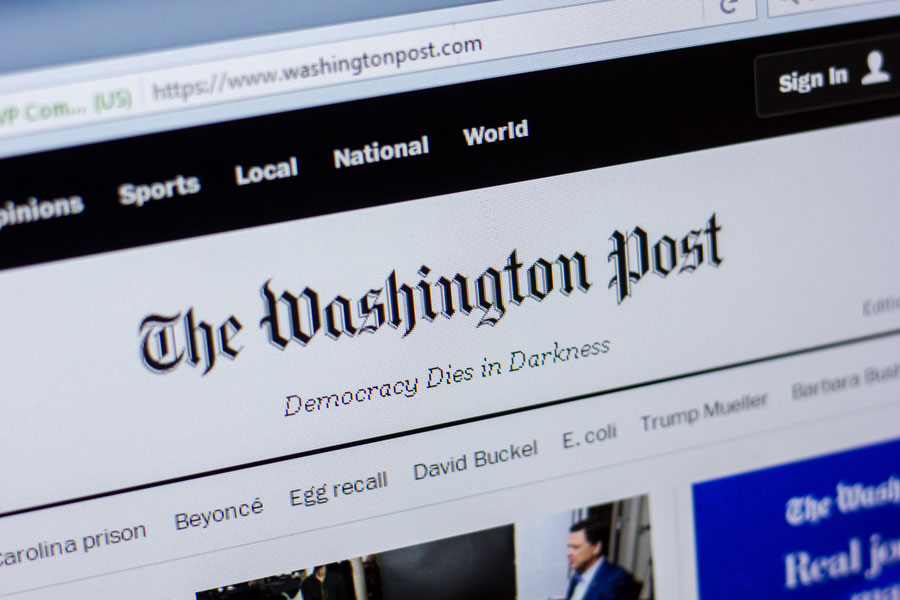
WASHINGTON, D.C. – The Washington Post announced a sweeping reduction of its workforce this week, cutting more than 300 positions and reshaping its editorial operations in response to mounting financial challenges in the newspaper industry.
According to internal communications and multiple media reports, about a third of the paper’s staff were laid off on Wednesday in a restructuring aimed at reducing losses and steering the organization toward long-term financial sustainability.
The cuts were disclosed in a virtual meeting with newsroom staff and outlined in a memo by Executive Editor Matt Murray. They included the elimination of entire sections such as sports and books and substantial reductions to foreign, local, and cultural coverage.
Several overseas bureaus, including those covering the Middle East and Ukraine, were shuttered or dramatically scaled back, with reporters informed of job losses even while on assignment abroad.
Industry data show The Post has faced steep financial losses in recent years, with reported deficits near $100 million in 2024 and sharp declines in digital traffic and subscriptions. Leadership has cited these mounting losses and shifting consumer behavior as key drivers behind the changes.
The paper is owned by Jeff Bezos, founder of Amazon, who purchased the Post in 2013. Management and allies argue the layoffs are an unfortunate but necessary step to reposition the outlet in a media environment where traditional print revenue has eroded and competition from online platforms has intensified. Executive editors have described the move as part of a broader effort to refocus resources on coverage areas that deliver the greatest reader value.
However, critics within the newsroom and veteran journalists have questioned whether The Post can sustain high-quality reporting while substantially downsizing its ranks. Bob Woodward, a longtime Post reporter, said he was “crushed” by the cuts and emphasized the toll on news quality and institutional expertise.
The layoffs come amid broader structural pressures facing newspapers in the United States. Traditional media outlets have struggled with falling advertising revenue and shifting digital consumption habits, trends documented by media economists and industry analysts as part of a long-term decline in newspaper profitability.
Observers note that even high-profile news brands have found it difficult to balance journalistic ambition with financial viability, a challenge that has intensified as digital platforms capture larger shares of audience engagement and ad dollars.
The Post Guild and union representatives have vocally opposed the cuts, arguing that they weaken the newspaper’s ability to fulfill its public service mission. Some laid-off staffers and supporters have organized fundraiser efforts and public rallies to support affected employees and draw attention to the strategic decisions behind the layoffs.
Remaining newsroom leaders say they are working to adapt the organization for the future, though critics warn that further declines in coverage breadth may accelerate subscriber losses and diminish the outlet’s influence.
Key Facts and Details
| Category | Details |
|---|---|
| Organization | The Washington Post |
| Owner | Jeff Bezos (since 2013) |
| Announcement Date | Early February 2026 |
| Number of Jobs Cut | More than 300 positions |
| Share of Workforce | Approximately one-third of staff |
| Nature of Action | Company-wide layoffs and newsroom restructuring |
| Departments Most Affected | Sports, Books, and portions of national, local, and international coverage |
| Stated Reason by Leadership | Cost reductions and a “strategic reset” in response to financial losses and changing reader habits |
| Recent Financial Context | Reported significant annual losses in recent years, including roughly $100 million in 2024 |
| Industry Context | Ongoing decline in traditional newspaper advertising revenue and print circulation |
| Leadership Response | Management described the cuts as painful but necessary for long-term sustainability |
| Reaction from Journalists | Strong criticism from some veteran reporters and union representatives |
| Notable Reaction | Bob Woodward said he was “crushed” by the layoffs |
| Broader Significance | Seen as another major sign of financial strain across legacy media |